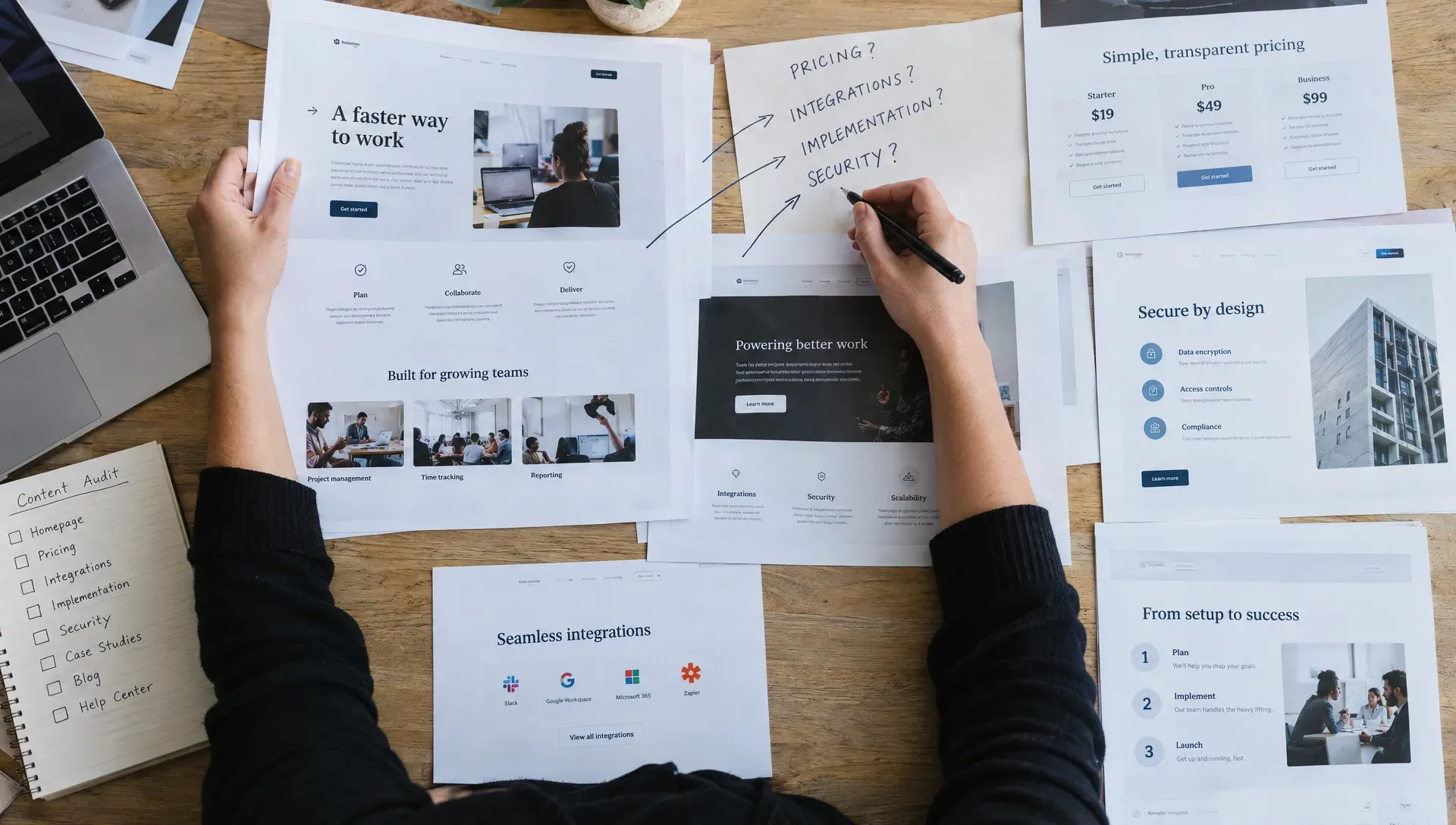
An AI powered sales assistant can answer routine buyer questions, collect qualification details, book meetings and prepare follow-ups without a rep handling each interaction. But its independence should stop where the conversation requires unsupported claims, commercial commitments or judgment about a complex deal.
The useful distinction is not whether AI can produce an answer. It is whether it has approved information, permission to act and a clear fallback when something falls outside its remit.
For B2B sales teams, that means delegating repeatable work while keeping reps responsible for discovery, negotiation and relationship decisions. Here is how to draw that boundary across the buyer journey.
What an AI powered sales assistant can handle independently
“Without a rep” should mean without a rep participating in every exchange, not without anyone setting rules or reviewing performance. A team still needs to approve the knowledge sources, define qualification criteria and decide which actions the assistant can take.
Once those boundaries are in place, this is a practical division of responsibility. These are potential capabilities to evaluate, not features every product necessarily offers.
- Task: Answer standard product questions — Suitable for independent handling?: Yes, using approved sources — Boundary to establish: Escalate missing, conflicting or account-specific information
- Task: Collect qualification details — Suitable for independent handling?: Yes — Boundary to establish: Ask agreed questions without making unsupported fit decisions
- Task: Schedule a meeting — Suitable for independent handling?: Yes, with calendar access and routing rules — Boundary to establish: Confirm the correct meeting type, availability and time zone
- Task: Follow up after an unfinished conversation — Suitable for independent handling?: Yes, within an approved workflow — Boundary to establish: Control recipients, timing, content and sending permissions
- Task: Reconnect with a returning prospect — Suitable for independent handling?: Yes, when identity is reliably established — Boundary to establish: Respect privacy choices and avoid guessing identity
- Task: Prepare a lead brief — Suitable for independent handling?: Yes, from available records — Boundary to establish: Separate buyer statements from inferences
- Task: Negotiate pricing or contractual terms — Suitable for independent handling?: Usually not — Boundary to establish: Require explicit human approval for commitments
The boundary often runs through a task rather than around it. An assistant might explain published pricing independently but need approval before offering a discount.
Answer questions from approved content
Product questions are a strong starting point because many have an established answer: supported integrations, onboarding steps, published pricing structure or documented capabilities.
An AI powered sales assistant can handle these questions when its answers are grounded in current, approved material. Citations help buyers check the source and help your team investigate a disputed answer. They do not, by themselves, guarantee that the answer is correct or that the source is current.
Consider a visitor asking whether your product integrates with their CRM. The assistant can explain a documented integration. It should not turn “we have an API” into “we support your custom workflow” without evidence.
Treat security and compliance questions similarly. The assistant can share approved public information, but it should hand over requests for restricted documents, bespoke assurances or claims that are absent from the source material.
Collect qualification details without conducting full discovery
An assistant can ask about company size, use case, current tools, buying timeline and the problem that brought someone to the website. That removes repetitive intake work from the rep’s day.
The questions should serve the next step. If your team needs a use case and region to route the meeting, collect those details. Do not make every visitor complete a lengthy interrogation before seeing availability.
Also distinguish capturing evidence from interpreting it. “We need this live by December” is a buyer statement. “This is a high-priority opportunity with approved budget” is an inference unless the buyer supplied that information.
Qualification can establish whether a conversation deserves attention. It rarely replaces discovery into stakeholders, internal constraints and the consequences of doing nothing.
Book meetings within defined rules
Scheduling is suitable for delegation when the meeting types, routing rules and calendar permissions are clear. The assistant can collect required details, offer available times and confirm a successful booking.
An AI powered sales assistant should only report that a meeting is booked after the scheduling system confirms it. A proposed time is not a reservation, and a failed calendar action should not produce a success message.
Useful booking boundaries include the correct owner, meeting duration, time zone and any eligibility requirements. When the routing decision is ambiguous, a request for review is safer than choosing an arbitrary rep.
The same principle applies to CRM updates. Capturing a conversation summary is different from changing an opportunity stage, forecast category or deal owner. Those actions deserve separate permissions.
Where a rep should stay involved
The clearest handoff point is a request that creates a commitment your company must honor. Discounts, custom contract terms, implementation guarantees and roadmap promises should remain with an authorized person unless a narrowly defined policy explicitly permits them.
A second boundary is complex judgment. A buyer describing a politically sensitive rollout across several departments needs discovery, not a confident summary of a few website messages.
The assistant can still help before the handoff. It can record the request, explain that someone needs to review it and pass along the relevant context. That is useful progress without pretending to resolve the issue.
These boundaries address a real technical risk. The NIST Generative AI Profile identifies confabulation, including confidently stated false content, as a risk organizations need to manage. In sales, an unsupported answer can become an apparent promise to a customer.
Make escalation a defined outcome
An AI powered sales assistant needs an escalation path that works even when no rep is online. Otherwise, “I’ll connect you with someone” can become another dead end.
Define what happens when information is missing, a buyer requests a person or an action fails. The fallback might be collecting contact details for review, offering an appropriate meeting or explaining that the question remains unresolved.
The handoff should include the buyer’s question, relevant conversation history, sources already consulted and the reason for escalation. Reps should not have to ask the buyer to repeat everything.
If nobody is available immediately, say so. Do not imply that a rep is joining or promise a response time your team has not agreed to meet.
What can happen after the visitor leaves?
Independent assistance does not have to end with the website conversation. Follow-up, returning-visitor outreach and meeting preparation can also run within defined boundaries. The important distinction is between preparing an action and having permission to execute it.
Continue an unfinished conversation
A follow-up can refer to the question the buyer asked, share an approved resource or help complete a booking. That is more useful than a generic message that ignores the original interaction.
Nudge’s Nurturing Agent prepares context-aware follow-ups for visitors who leave without booking or miss a meeting. Its workflow lets teams set sequences, timing and approval controls.
For any tool, check whether it drafts messages for review or can also send them under configured rules. Start with review when the content is sensitive or the contact policy is unsettled. Allow independent sending only within a clearly approved scope, including appropriate opt-out handling.
Reconnect with a known returning prospect
A returning visitor may be continuing an evaluation, checking pricing or looking for a specific answer. That context can inform a follow-up, but a page visit is not proof of purchase intent.
Nudge’s Outreach Agent uses returning-visitor context for prospects who previously left an email, drafting personalized follow-ups based on their earlier conversation and return activity.
Keep the identity boundary explicit. Recognizing a known contact is different from identifying every anonymous visitor. Outreach should reflect reliable information and applicable privacy choices, not guesses about who is browsing or why.
Prepare the rep for the meeting
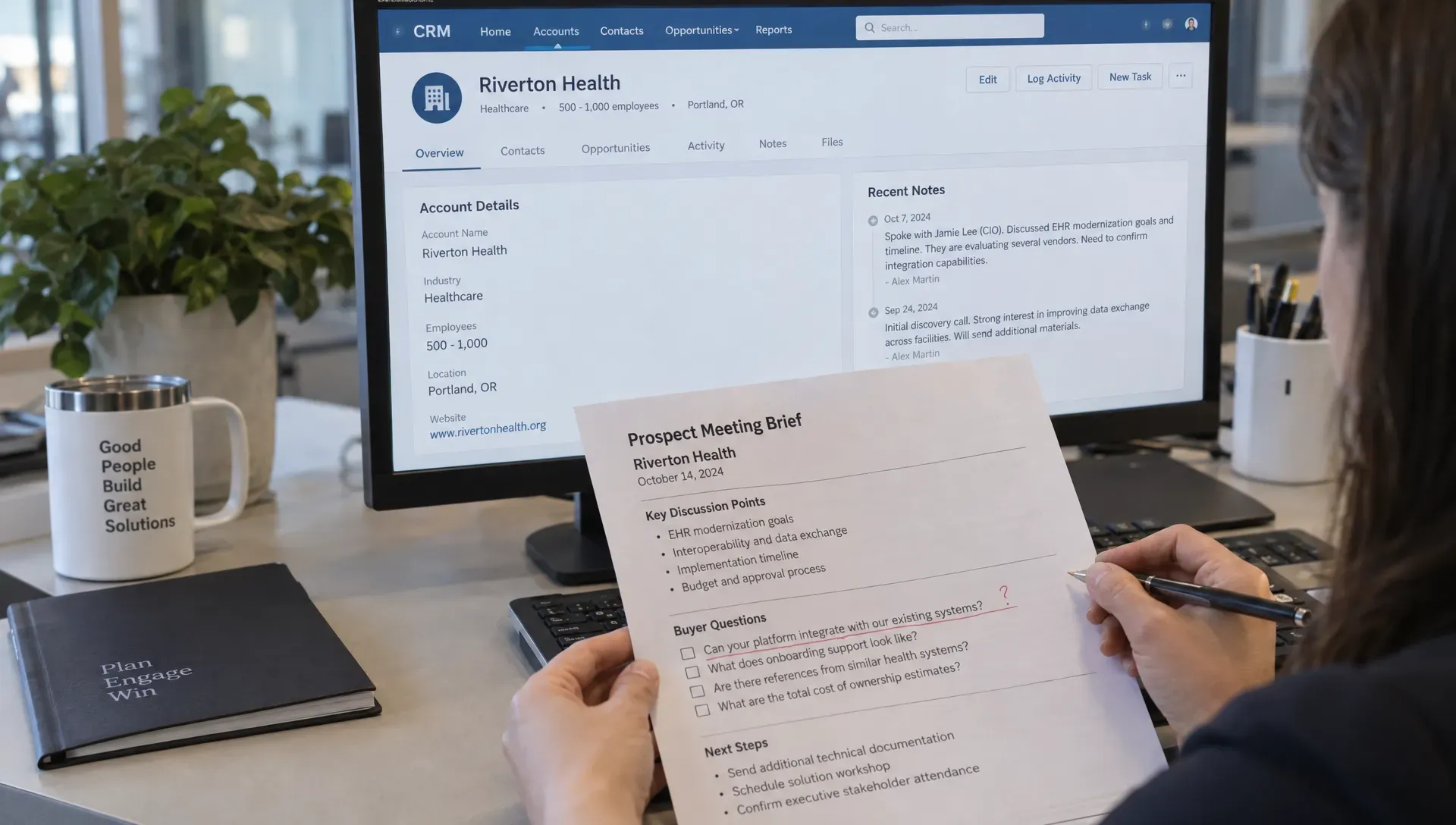
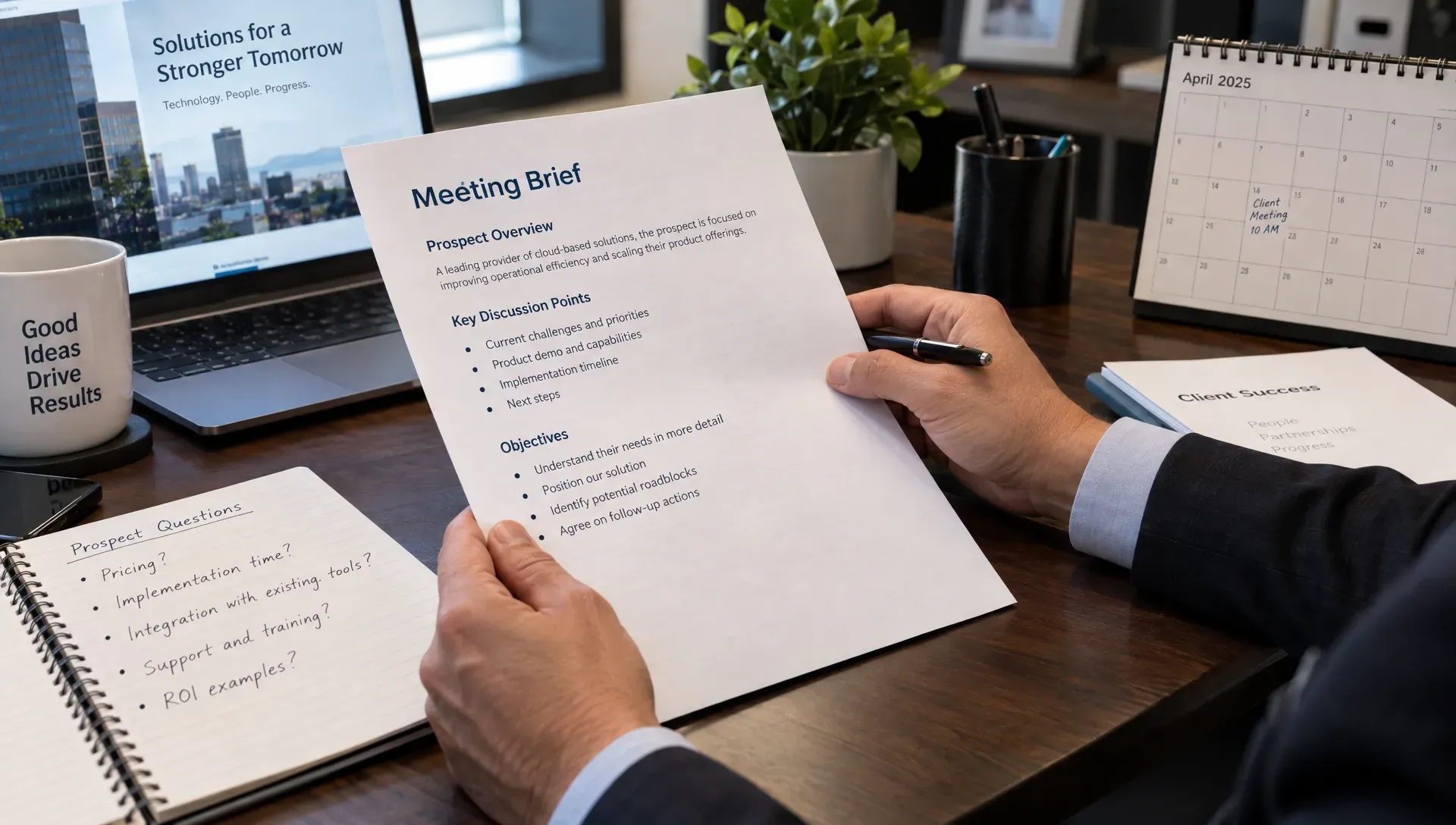
An AI powered sales assistant can assemble a brief containing the prospect’s stated problem, questions, qualification details and relevant CRM context. That gives the rep a starting point without requiring manual reconstruction of the interaction.
A useful brief distinguishes three things: what the buyer said, what the records show and what remains unknown. If budget was never discussed, it should say “not provided” rather than estimate a number.
Preparation should also surface unresolved questions. If a visitor asked about a custom integration and the assistant escalated it, that request belongs near the top of the brief.
Reporting follows the same rule. Summaries of conversion or pipeline data need defined metrics and access controls, not just fluent explanations.
Set permissions by action, not by job title
Calling a tool a “sales assistant” does not establish what it should be allowed to do. Answering a question, sending an email and changing a CRM record have different consequences.
For each action, document the approved information source, execution permission, escalation condition and record of what happened. Keep the rules specific enough to test.
An AI powered sales assistant might be authorized to explain published pricing, for example, while being prohibited from offering a discount. It might create a contact record but require review before updating an existing opportunity.
A workable initial policy could include:
- Answers: Use approved product material and acknowledge missing information.
- Booking: Use agreed calendars and routing rules, then confirm the actual result.
- Follow-up: Apply approved recipients, timing, message scope and sending controls.
- Handoffs: Pass unresolved questions to a person with the relevant context.
These are operating rules to establish with your chosen platform, not capabilities to assume every platform supports.
Test failures before expanding autonomy
Test more than the happy path. Use questions with no documented answer, conflicting source material, requests for discounts and attempts to make the assistant ignore its instructions.
Also test unavailable calendars, failed CRM writes, duplicate contacts and visitors who ask for a human. Review whether the assistant acknowledges failure accurately and preserves enough context for someone to recover.
Measure attended, appropriately qualified meetings rather than bookings alone. Track unsupported answers, routing errors, follow-up complaints and handoffs that never reach an owner.
Expand permissions only when the relevant action is working reliably. Reliable question answering does not automatically justify independent outbound sending or broader CRM access.
Frequently asked questions
Can an AI powered sales assistant replace a sales rep? It can take over defined tasks such as routine questions, intake, scheduling and preparation. That does not replace a rep’s responsibility for complex discovery, negotiation or relationship management.
Can it run when nobody on the sales team is online? Yes, if the platform supports unattended operation and the permitted actions are configured. It also needs an honest fallback for requests that require a person, without implying immediate human availability.
Should every follow-up be sent automatically? No. Drafting and sending are separate permissions. Automatic sending is appropriate only when contact rules, message boundaries, timing and opt-out handling are established. Sensitive or exceptional messages should remain subject to review.
What should we automate first? Start with a narrow, repeatable workflow such as approved product answers and standard meeting booking. Review failures and buyer outcomes before extending permissions to follow-up or CRM changes.
Put a clear boundary around the work you delegate
Nudge combines website conversations, content-based answers with citations and meeting booking with agents for follow-up, returning prospects and sales preparation. Its CRM integrations and analytics support the broader sales workflow.
If your team is evaluating Nudge for B2B sales, bring a concrete task list: what should happen independently, what needs approval and what must reach a rep. That makes the evaluation about useful work and accountable handoffs, not simply whether an AI can hold a conversation.