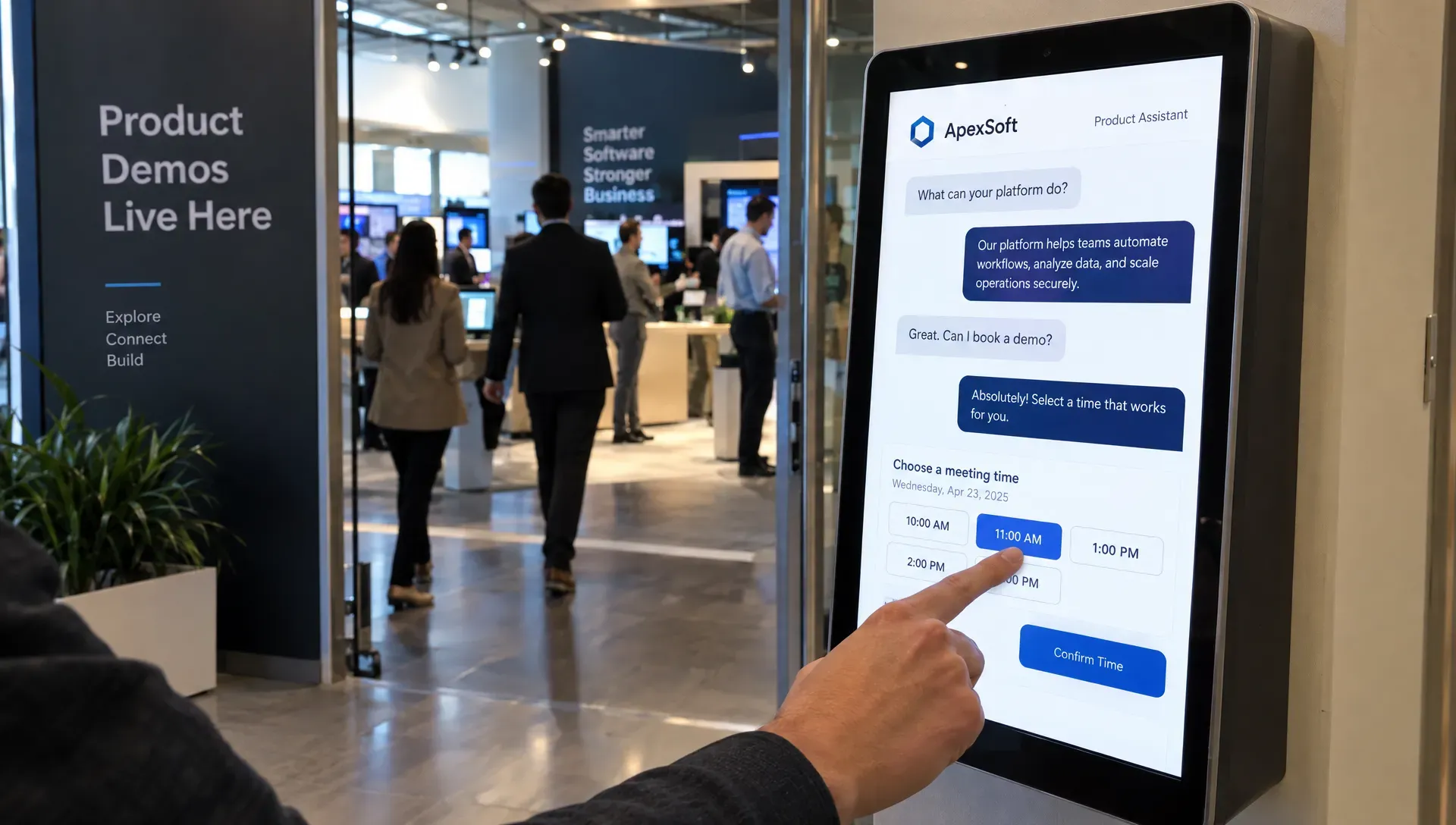
The best b2b lead generation software for an inbound team should solve a specific problem: unanswered buyer questions, abandoned forms, unidentified account interest or weak sales handoffs. A larger contact database will not necessarily fix any of those problems.
This shortlist compares seven options across website conversations, marketing automation, lead capture and account research. They are not interchangeable. Some help convert visitors who already show interest; others help your team understand accounts or find additional stakeholders after that interest appears.
Start with the conversion gap you need to close, then evaluate the relevant tools against your existing CRM, sales process and definition of a qualified opportunity.
Compare the best b2b lead generation software by inbound use case
- Software: Nudge — Strongest fit in this shortlist: Website conversations, meeting booking and follow-up — What to validate before buying: Answer quality, booking experience and handoff context
- Software: HubSpot — Strongest fit in this shortlist: Connected CRM and marketing automation — What to validate before buying: Required products, workflow coverage and implementation effort
- Software: Apollo — Strongest fit in this shortlist: Contact research and account expansion — What to validate before buying: Coverage and accuracy within your target market
- Software: OptinMonster — Strongest fit in this shortlist: Targeted website forms and conversion campaigns — What to validate before buying: Incremental qualified leads and visitor experience
- Software: ZoomInfo — Strongest fit in this shortlist: GTM data, enrichment and account intelligence — What to validate before buying: Relevant data coverage and operational requirements
- Software: LinkedIn Sales Navigator — Strongest fit in this shortlist: Buying-group research and relationship development — What to validate before buying: Research usefulness and adoption by sales reps
- Software: Leadfeeder — Strongest fit in this shortlist: Company-level website visitor identification — What to validate before buying: Account match quality and actionable traffic signals
For example, a team getting qualified pricing-page traffic but few conversations needs a different solution from one receiving incomplete company records. The first should investigate engagement and booking; the second should investigate enrichment.
Use these recommendations as a shortlist by job, not as a claim that one platform replaces every other category.
1. Nudge
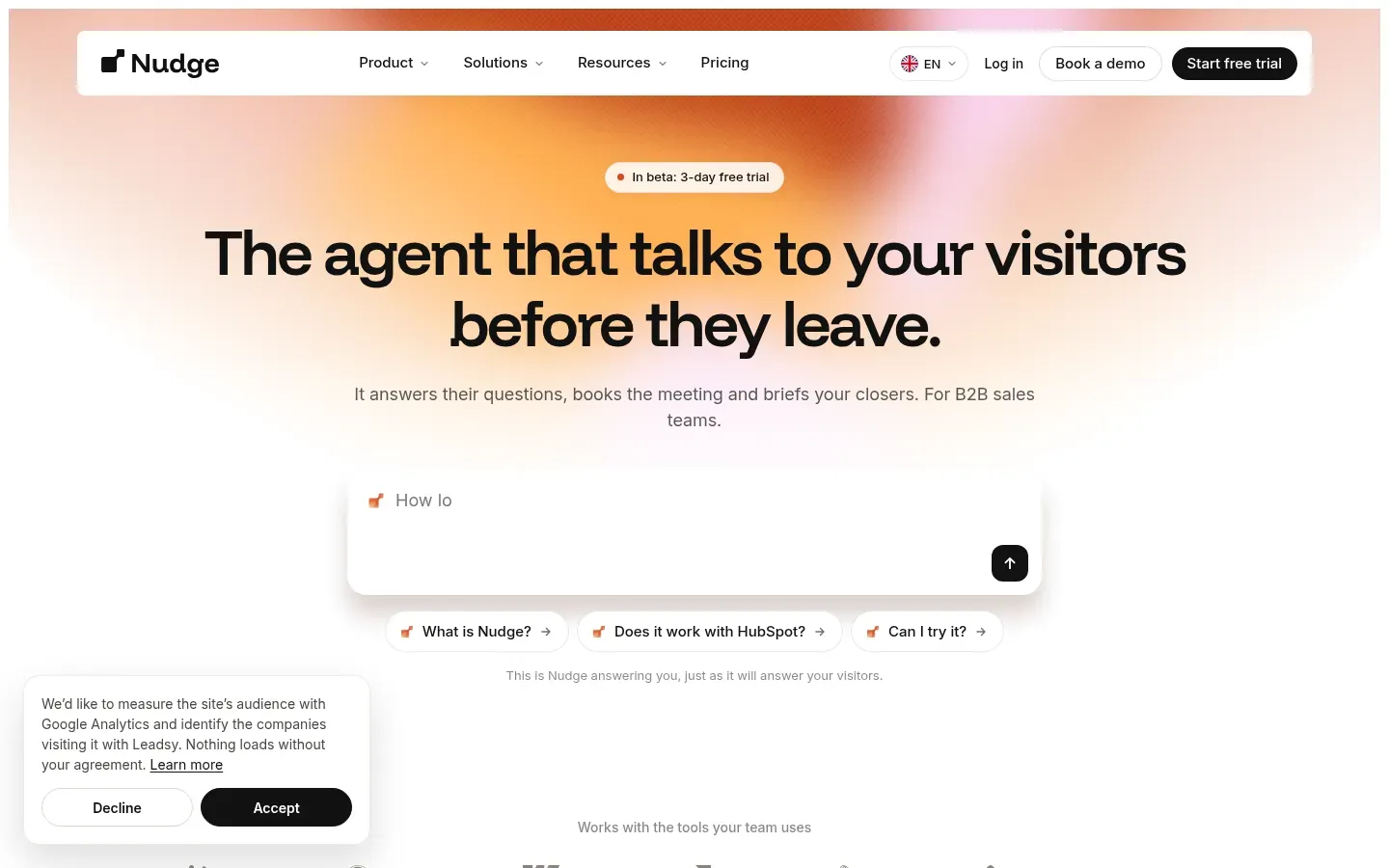
Nudge focuses on the moments between a website visit and a sales conversation. Its AI platform answers visitor questions, books meetings and supports follow-up, returning-visitor identification and sales preparation.
That makes it a relevant starting point when interested buyers arrive but leave without resolving a question or taking the next step. Rather than treating capture as the finish line, its scope extends into continuing the conversation and preparing the sales rep.
For teams evaluating the best b2b lead generation software around inbound conversion, Nudge brings together several connected jobs: content-based answers with citations, personalized lead follow-ups and meeting preparation briefs. It also offers CRM integrations, pipeline and conversion analytics, plus the ability to ask questions about sales data.
Best fit: B2B sales teams that want to turn existing website interest into meetings while preserving context for follow-up.
During evaluation, bring real buyer questions about implementation, suitability and product limitations. Check whether the cited content supports each answer and whether the meeting brief captures the buyer’s actual concern. Test unsupported questions as well as straightforward ones.
Judge the workflow on qualified meetings held and useful sales context, not conversation volume alone. Confirm the details of your CRM integration rather than assuming every record type or field is supported.
2. HubSpot
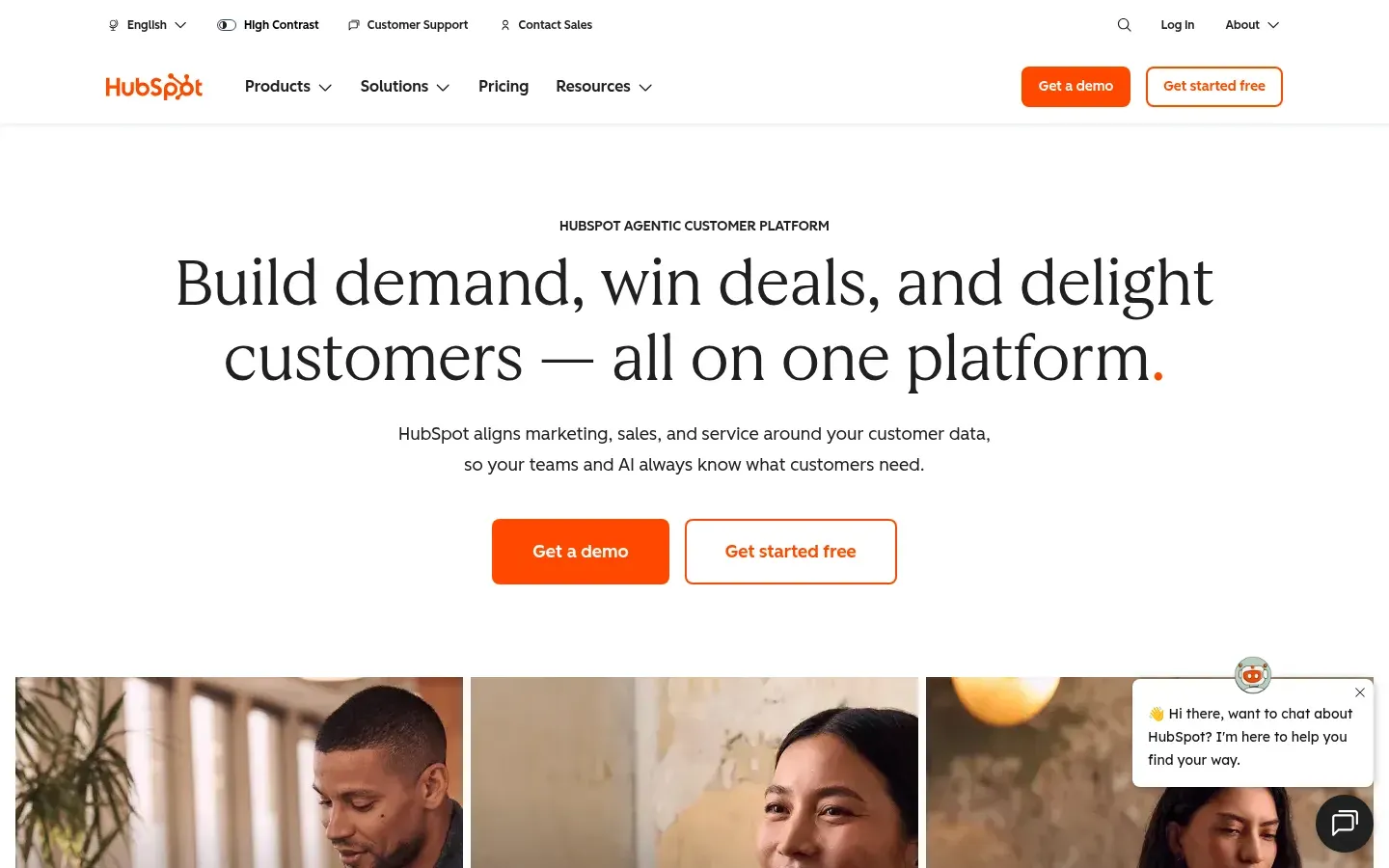
HubSpot combines CRM with marketing, sales, service, content and data management software. It is a strong candidate when the inbound problem spans several departments rather than a single website interaction.
Consider a team that captures inquiries successfully but manages campaign activity, lead status and sales follow-up in disconnected systems. A shared customer platform can be more relevant than adding another standalone capture tool.
HubSpot belongs among the best b2b lead generation software options for teams prioritizing a connected marketing-to-sales process. Its marketing automation capabilities make it particularly relevant when nurturing and lifecycle management sit alongside acquisition.
Best fit: Teams evaluating a broader CRM and marketing operating system, especially when fragmented records are making handoffs difficult.
Build the evaluation around one complete journey: a visitor submits an inquiry, marketing records the context, sales receives the lead and the eventual opportunity remains connected to that history. Ask which products and subscription levels are required for your version of that journey.
Then examine implementation work. Field definitions, lifecycle stages and ownership rules matter as much as the interface. If those foundations are inconsistent, moving them into a broader platform will not automatically improve qualification. Include setup, administration and any migration work in the buying decision.
3. Apollo
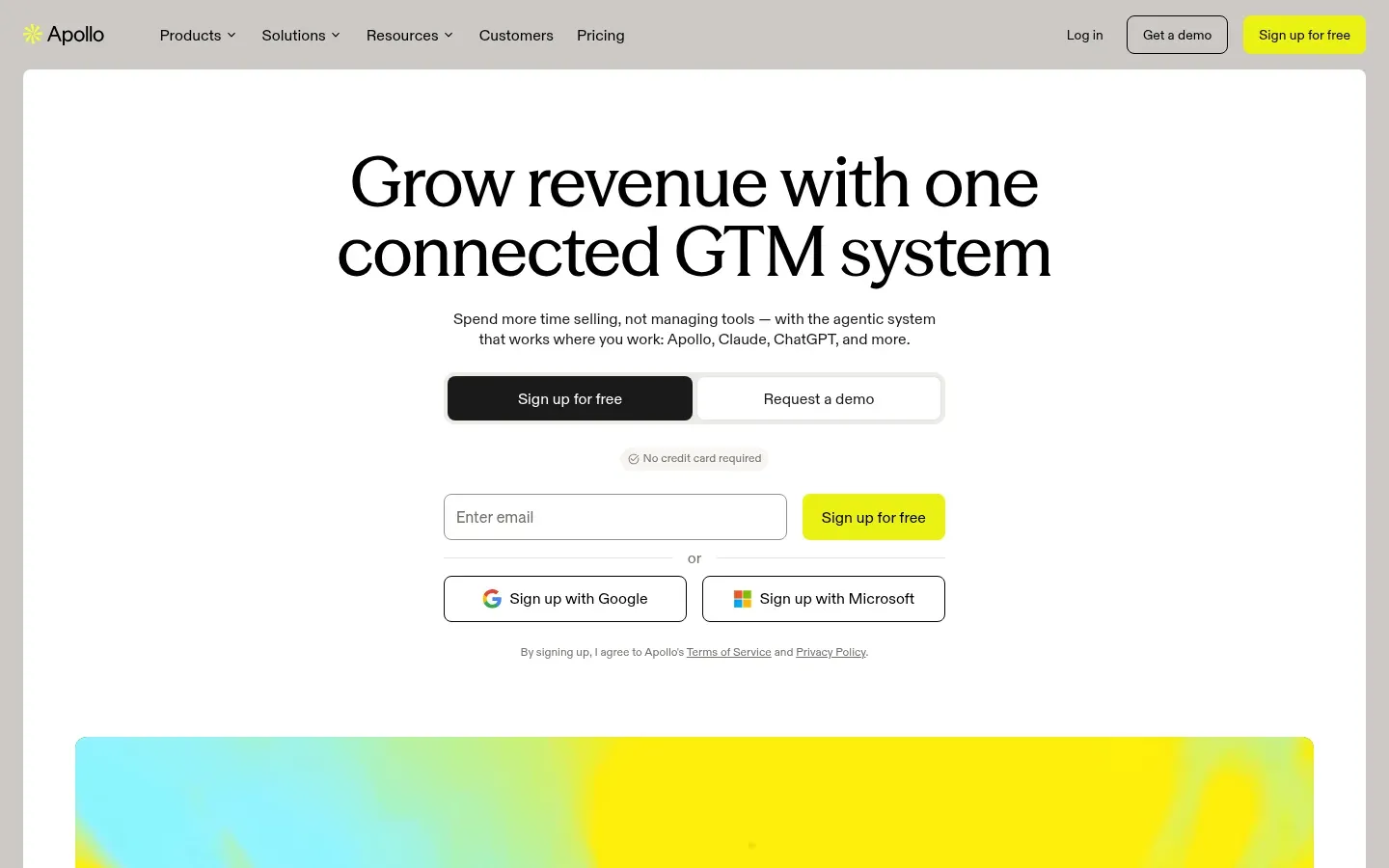
Apollo positions itself as an AI go-to-market system connecting data, intelligence and execution. Its offering includes GTM data, background agents, a workspace and integrations.
For inbound teams, its clearest role is often account and contact research around interest you have already captured. One person downloading a resource may reveal an account worth investigating, but that person may not represent the whole buying group.
Apollo can be evaluated for finding relevant stakeholders and connecting account research with subsequent GTM work. Keep that use case separate from engaging the original website visitor: contact discovery and visitor conversion address different stages of the process.
Best fit: Teams that need to expand from an inbound contact into a better understanding of the account and its potential stakeholders.
When comparing the best b2b lead generation software for this task, sample your actual market rather than searching only for recognizable enterprise brands. Include smaller companies, regional businesses and difficult-to-reach job functions that resemble your pipeline.
Review whether records contain current employers, relevant roles and usable contact details. Then check how those records enter your CRM without duplicating existing contacts or overwriting better information. Database breadth matters less than usable coverage of the accounts your team can realistically win.
4. OptinMonster
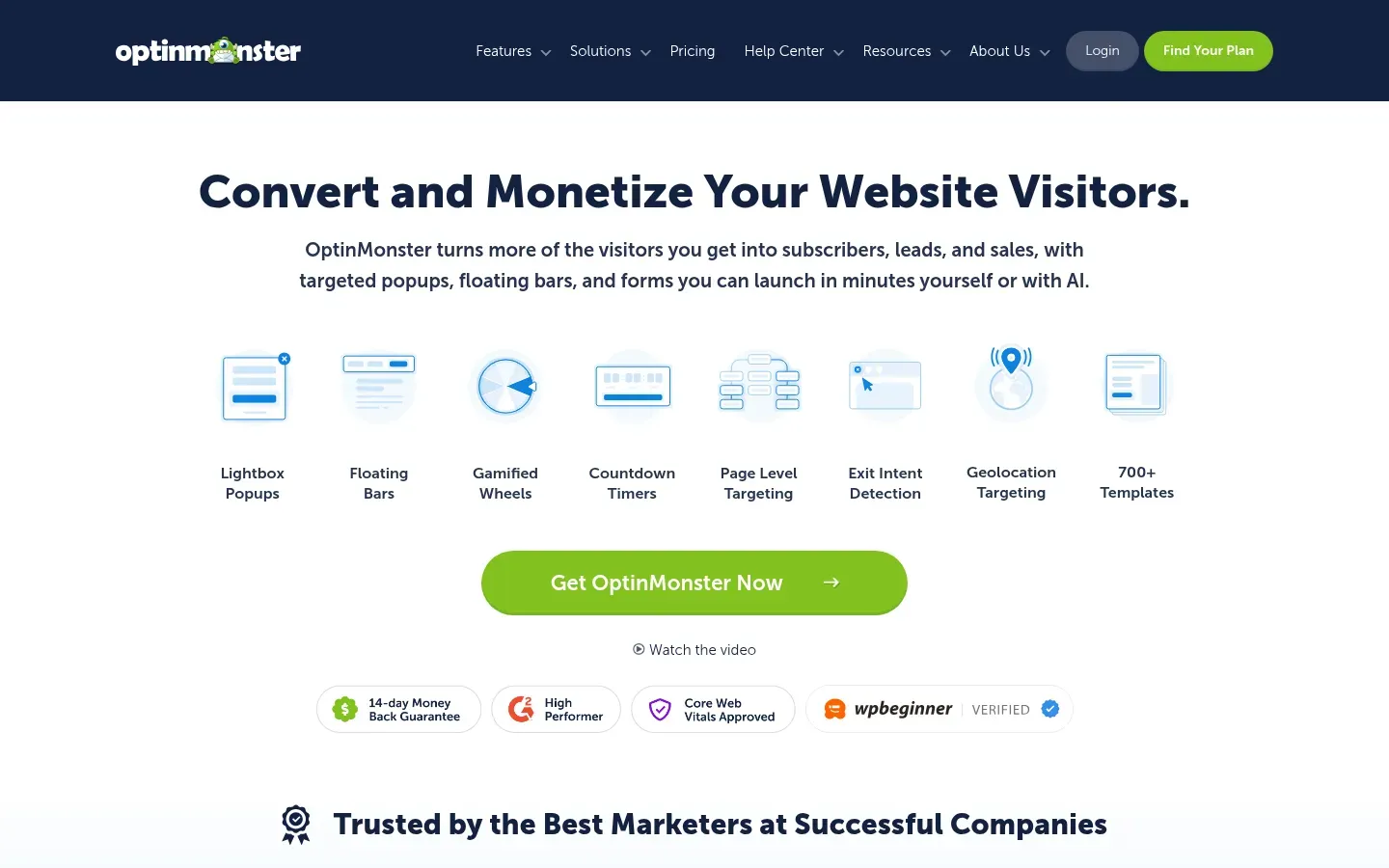
OptinMonster helps websites capture subscribers and leads through targeted popups, floating bars and forms. Its features include lightbox popups, page-level targeting, countdown timers and gamified wheels.
For B2B inbound teams, the relevant question is whether a targeted offer can turn a useful page visit into an appropriate next step. A technical guide might support a resource signup, while a high-intent product page might justify a consultation offer.
The available formats are tools, not a campaign strategy. Match the message to the visitor’s task rather than putting the same interruption across every page. A higher submission rate can still be a poor result if the offer attracts people who will never qualify.
Best fit: Marketing teams that want more control over on-site lead capture without making a conversational agent the central experience.
OptinMonster fits a shortlist of the best b2b lead generation software when the primary gap is targeted capture rather than account intelligence or sales preparation.
Run a controlled comparison on a defined set of pages. Measure qualified submissions per eligible visitor, then inspect mobile usability, dismissal behavior and downstream lead quality. Avoid counting contacts who already existed in the CRM as new acquisition. Also check whether an added popup interferes with existing forms or navigation.
5. ZoomInfo
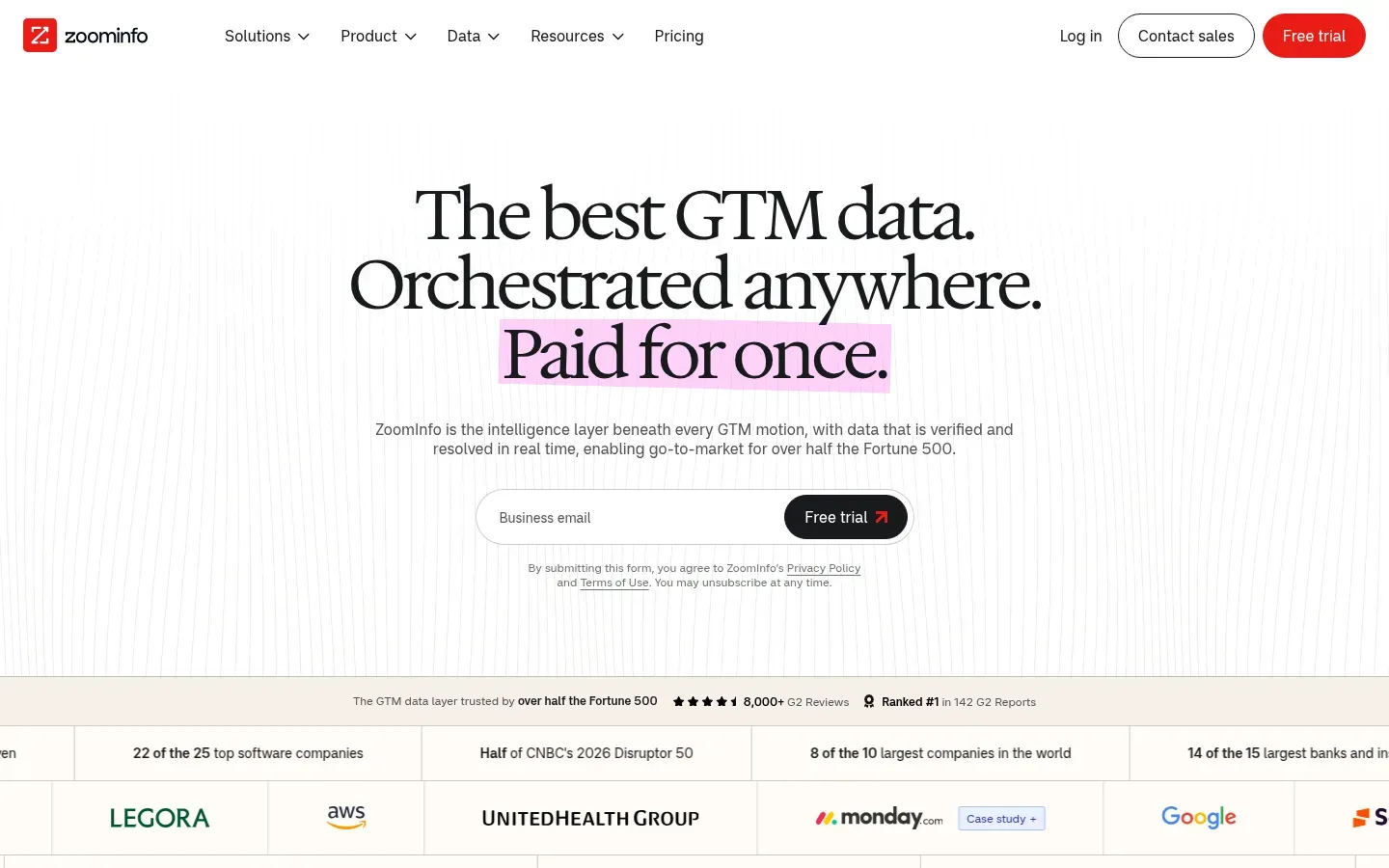
ZoomInfo provides GTM data and capabilities spanning outbound prospecting, account-based marketing, data enrichment, orchestration and inbound lead conversion. That scope makes it relevant when an inbound team’s problem extends beyond collecting an email address.
For example, revenue operations may need to improve account records, connect inquiries to existing companies or support coordinated follow-up across a target account. Those are data and process problems as much as conversion problems.
ZoomInfo describes its data as verified and real-time. Treat those descriptions as claims to validate against your own audience, especially when your market includes niche roles or less-visible companies.
Best fit: Teams with substantial enrichment and account intelligence requirements, plus the operational capacity to manage the resulting workflows.
Among the best b2b lead generation software options, ZoomInfo merits evaluation when data completeness is limiting inbound execution. It should still earn its place through a representative test rather than database size alone.
Ask how updates interact with trusted CRM fields, what happens when records conflict and how your team can inspect the source of a change. Evaluate the specific products and data access included in the proposed agreement. A broad platform overview does not establish that every capability your workflow needs is included.
6. LinkedIn Sales Navigator
LinkedIn Sales Navigator supports sales research through lead and account search, saved lists and alerts. Its role in an inbound stack is different from a website form, chatbot or visitor identification tool.
It is useful when a rep needs to understand the people around an inquiry: the likely decision-maker, related functions and other stakeholders who may influence the purchase. Professional profiles can add context that a short form submission does not capture.
That research should make the next conversation more relevant, not become an excuse to contact everyone at the company. An inbound request from one employee does not establish interest across an entire organization.
Best fit: Sales teams handling considered purchases with multiple stakeholders and a meaningful account research stage.
The best b2b lead generation software for account research should help reps make better decisions, not merely accumulate saved profiles. During a trial, give several reps the same set of real inbound accounts and assess the usefulness of what they find.
Look for clearer stakeholder hypotheses, better preparation and less time spent researching irrelevant people. Validate any CRM connection and workflow requirements separately. Sales Navigator supports research and relationship development; it should not be evaluated as though professional profile access automatically supplies permission for every outreach channel.
7. Leadfeeder
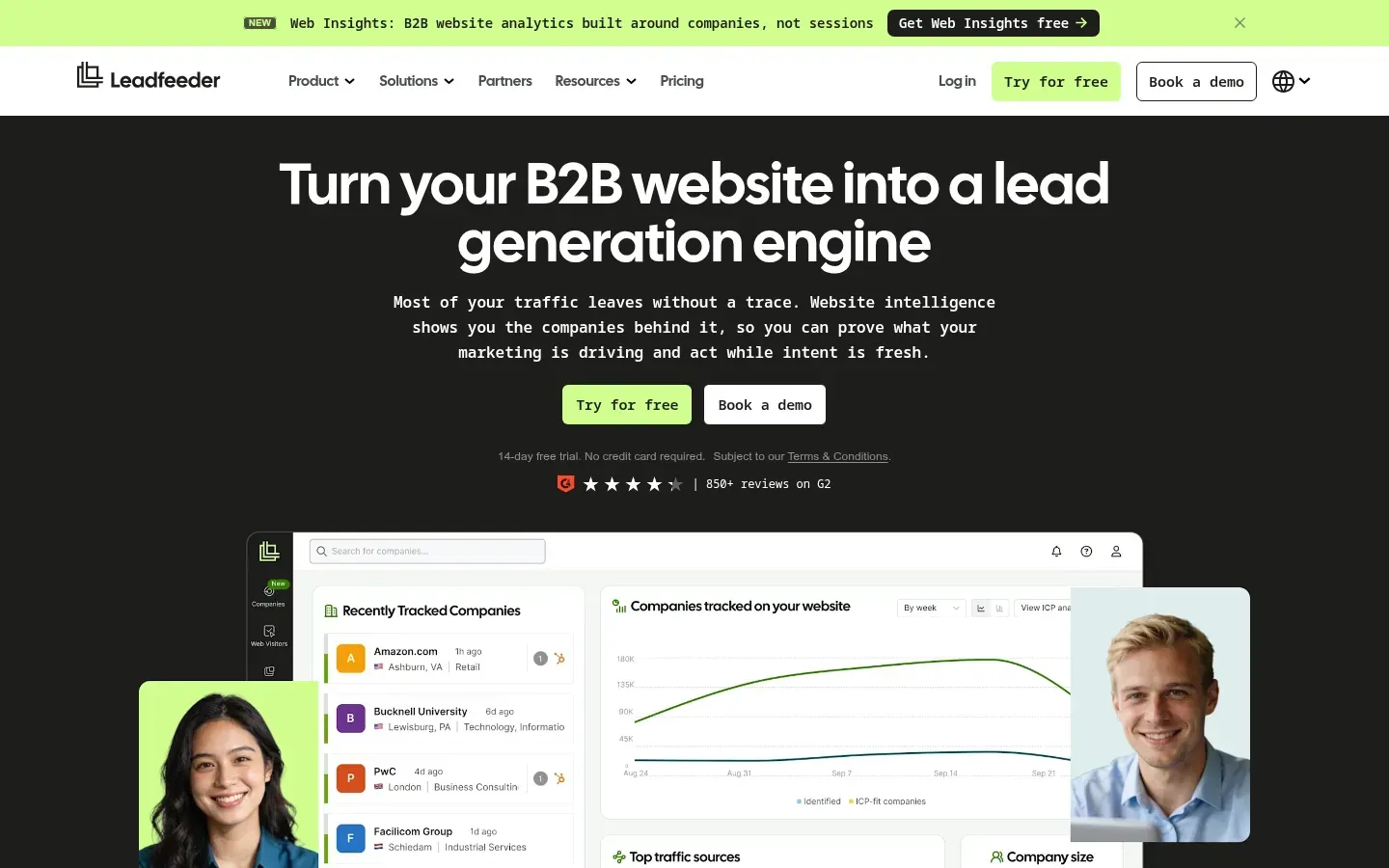
Leadfeeder identifies companies visiting a website and provides traffic analytics, tracked company lists and traffic source information. It helps teams investigate account interest that may not result in a form submission.
The distinction between a company and a person is essential. Recognizing an organization behind a visit does not necessarily reveal which employee browsed, why they visited or whether they want a sales conversation.
Best fit: B2B marketing and sales teams that want company-level visibility into website engagement and a better basis for prioritizing account research.
A useful evaluation starts with whether the identified companies match your ideal customer profile. Then examine whether page activity and traffic sources provide enough context to justify a next step. Careers traffic, customer support visits and commercial research should not all receive the same treatment.
Leadfeeder belongs in a comparison of the best b2b lead generation software when anonymous account interest is the gap. It complements direct capture rather than making explicit buyer requests unnecessary.
Your team still needs an appropriate response. When a known lead returns, use follow-up grounded in the buyer’s context rather than assuming every return visit warrants a meeting request. Assess useful account discoveries, not just the total number of organizations identified.
Put the shortlist through a practical pilot
Choose two or three tools that address the same priority. Comparing seven unrelated feature lists will not reveal which investment improves your actual inbound process. This inbound software evaluation framework can help structure the broader decision.
Test the complete handoff
Use realistic scenarios: a new inquiry, an existing customer, a returning prospect and a duplicate contact. Include an interaction outside normal working hours and a failed or incomplete submission.
Follow each scenario from the website through the CRM and into the rep’s working day. Check ownership, timestamps, consent records where applicable and the preservation of the buyer’s question. A notification arriving successfully is not the same as a usable handoff.
For conversational software, compare answers against approved content and test questions the system should not confidently answer. For capture software, verify that submissions reach the right destination with the expected fields.
The best b2b lead generation software should reduce work across that journey. If sales must reconstruct the conversation manually, include that effort in the evaluation rather than treating it as someone else’s problem.
Validate data with a repeatable sample
For database, enrichment and identification products, define the sample before seeing the results. An illustrative test might use 50 accounts distributed across your actual company sizes, regions and industries.
For contact data, review employer accuracy, role relevance, duplicate frequency and the availability of the fields you need. Record unavailable information separately from incorrect information; they create different operational problems.
For company identification, examine match plausibility and whether the resulting account signals are useful. Do not apply person-level accuracy measures to company-level outputs.
Use the same definitions across vendors and retain a record of the test date. Calculate accuracy against the records you actually checked, with a clear denominator. A small sample is directional rather than definitive, but it is more informative than a polished demonstration built around easy-to-find accounts.
Compare total cost and operational effort
Request a written estimate based on your anticipated users, traffic, data usage and workflows. Depending on the product, seats, contact allowances, enrichment credits, additional modules or usage limits may affect the final cost. Do not assume every vendor uses the same pricing model.
Add implementation, migration, administrator time and the cost of maintaining integrations. Also identify existing tools the purchase could genuinely replace, without assuming consolidation will happen automatically.
A useful comparison puts the best b2b lead generation software against cost per sales-accepted opportunity, not merely subscription cost per month. Keep a separate view of cost per held meeting if your sales cycle is too long to assess opportunities during the pilot.
Confirm renewal terms and how usage overages work before committing. These details can change the economics even when the initial quote appears competitive.
Check privacy and data handling
Website tracking, company identification, contact enrichment and direct marketing have different privacy implications. Review the actual processing involved rather than relying on a general claim that a tool is compliant.
Ask about data sources, subprocessors, retention periods, deletion requests, access controls and contractual responsibilities. Confirm how the implementation handles applicable notice, consent or opt-out requirements. Involve your privacy or legal team when personal data crosses jurisdictions.
Do not interpret a company visit as individual permission to receive outreach. Likewise, finding a contact record does not settle whether a proposed use is lawful or appropriate.
Document what happens when someone unsubscribes or requests deletion across connected systems. A workflow that recreates suppressed records during the next enrichment cycle needs attention before launch.
Measure qualified pipeline, not captured contacts
Agree on success before starting the pilot. Useful measures include qualified conversations per eligible visitor, sales acceptance rate, meetings held, opportunities created and pipeline generated. Define each stage consistently so a changed label does not look like improved performance.
Compare similar traffic sources and account segments. A campaign bringing more students or job seekers can increase capture volume while reducing commercial value. For longer sales cycles, use leading indicators without presenting them as proven revenue.
The best b2b lead generation software should improve a meaningful stage of this funnel without worsening another. More bookings are not enough if attendance or qualification falls sharply.
If the real problem is insufficient relevant traffic, address distribution separately. For lead-generation businesses announcing a genuine milestone, press release distribution for lead generation companies is one PR channel to evaluate. Track resulting qualified visits and opportunities rather than treating placements or backlinks as leads.
Choose the tool that fixes the next lost opportunity
Shortlist by the point where qualified interest disappears, then run a focused pilot against your current process. Keep the tool only if its improvement justifies the cost and operating effort.
If visitors leave with unanswered questions or sales meetings arrive without context, evaluate Nudge’s website conversations, booking, follow-up and preparation capabilities using real buyer scenarios.
Frequently asked questions
Which option is best for converting existing website visitors?
Nudge focuses on conversations and meeting booking, while OptinMonster focuses on targeted capture formats. Leadfeeder addresses company-level visibility. Choose according to whether the missing step is engagement, submission or account identification.
Should an inbound team buy a contact database?
It can help when account research, enrichment or stakeholder discovery is the bottleneck. It will not directly fix unclear messaging, unanswered website questions or a broken inquiry handoff.
What is the five-minute rule for leads?
It is a response-speed guideline encouraging prompt follow-up on inbound inquiries. Treat it as an operational target, not a universal guarantee of conversion. Measure meaningful responses rather than automated acknowledgments alone.
Can one platform replace the entire inbound stack?
Broad platforms can cover multiple jobs, but coverage depends on the products and configuration selected. Verify your required workflows before retiring existing tools.