A B2B conversation is ready for a sales handoff when the buyer has a relevant need, a clear reason to involve a person and an agreed next step. It does not require a complete qualification form. It does require enough context for the receiving rep to continue without making the buyer start over.
That distinction prevents two expensive mistakes: sending every curious visitor to sales and holding back useful conversations because budget or purchasing authority is still unknown. The readiness threshold should answer one practical question: Can the next person meaningfully advance what this buyer is trying to do?
Readiness is about the next conversation, not the entire deal
A pricing question is not automatically a buying project. A booked meeting is not automatically a qualified opportunity. Conversely, someone without a confirmed budget may still need a serious technical discussion before they can build a business case.
Separate three decisions:
- Ready for human help: A person can resolve something that self-service content or an automated answer cannot.
- Ready for sales acceptance: The receiving seller has a relevant request, enough context and a clear responsibility.
- Ready to become an opportunity: The conversation meets your organization’s criteria for an active buying process.
These decisions can happen together, but they do not have to. A technical consultation may be appropriate before commercial qualification is complete.
The threshold below concerns readiness. Your broader sales handoff process should separately define ownership, acceptance and what happens when a rep declines a transfer.
Four tests for a handoff-ready B2B conversation
Use these tests as a working standard, not a universal scoring model. Their purpose is to establish whether the proposed next conversation makes sense.
- Readiness test: Relevant business need — Evidence to look for: The buyer describes a workflow, problem or organizational use case your offer could address — What remains unresolved if it is missing: Whether sales can help at all
- Readiness test: Reason for human involvement — Evidence to look for: The buyer needs a tailored demo, commercial discussion, technical validation or another person-specific answer — What remains unresolved if it is missing: Why a meeting would be useful
- Readiness test: Agreed next step — Evidence to look for: The buyer requests or accepts a specific conversation, introduction or follow-up — What remains unresolved if it is missing: Whether the transfer matches their intent
- Readiness test: Actionable context — Evidence to look for: The receiving person can see the request, relevant constraints and outstanding questions — What remains unresolved if it is missing: How to continue without restarting discovery
A useful test is whether you can finish this sentence: “This buyer wants to speak with this person about this question, so they can make this decision.”
If the sentence depends on guesses, the B2B conversation needs clarification rather than a higher lead score. If it is clear, missing details such as company size or an exact purchasing date may be questions for the next conversation, not reasons to block it.
Treat unknowns differently from disqualifiers
“Budget not discussed” and “buyer confirmed the price is unaffordable” are different facts. So are “decision-maker unknown” and “buyer says the organization will not consider a purchase.”
Unknowns belong in the handoff as open questions. Confirmed conflicts should change the route, the proposed agenda or the decision to proceed.
For example, an operations manager might need to validate an integration before asking finance for funding. Requiring an approved budget before allowing that discussion would reverse the buyer’s actual decision process.
A confirmed requirement that your product cannot meet is different. A generic demo will not resolve a mandatory deployment restriction. Explain the limitation and determine whether a specialist can clarify a genuine alternative. Do not imply that sales can make an unsupported capability appear.
The purpose of qualification is to choose a useful next action, not to collect every field before helping.
A B2B conversation can therefore be ready for a handoff while still being commercially uncertain. Label that uncertainty plainly rather than upgrading it into “qualified budget” or “decision-maker confirmed.”
Route to the right person, not automatically to an account executive
Sometimes the buyer is ready for a person but not for a conventional sales call. An existing customer with an access problem needs support. A prospect validating architecture may need a technical specialist. A procurement contact requesting contract changes needs an appropriate commercial or legal owner.
Match the route to the unresolved task. Otherwise, a legitimate request becomes a poor sales meeting simply because it landed with the wrong person.
Research intent also needs care when personal and organizational interests overlap. An HR manager reading symptom-by-symptom menopause guidance might be gathering employee resources rather than evaluating a paid workplace benefit. If that person later contacts a benefits vendor, establish whether there is an organizational project before treating the inquiry as purchase intent. Personal health disclosures do not belong in sales qualification fields.
When someone explicitly asks to speak with sales, acknowledge the request rather than forcing a lengthy interrogation. Ask only what is necessary to connect them with the right person. If fit remains uncertain, say so in the brief.
The B2B conversation should determine the route. A job title, content topic or high activity score should not override what the person actually asked for.
What the readiness threshold sounds like in practice
The following examples are fictional. They illustrate how similar-looking requests can justify different next steps without turning discovery into a scripted checklist.
Research interest: answer first, then clarify intent
Buyer: “Can you send pricing? I’m comparing a few approaches for next year.”
Response: “I can share the available pricing information. Are you gathering options for planning, or is there a specific workflow you need to evaluate now?”
The buyer has expressed interest, but the purpose of a sales conversation is not yet clear. Answer the pricing question using accurate information rather than withholding it to secure a meeting.
If they only need planning material, offer that and ask whether follow-up would be useful. If they describe an active problem and want help comparing options, propose a focused discussion. The same opening question can lead to either outcome.
Technical evaluation: involve the specialist before budget is settled
Buyer: “We need to know whether this can work with our identity setup before we ask for funding.”
Response: “Which identity provider and access requirements would the technical discussion need to cover? I can help arrange the right conversation.”
This B2B conversation has a defined task: resolve a technical dependency so the buyer can decide whether to pursue funding. The absence of budget does not erase that purpose.
The handoff should identify the dependency, distinguish confirmed requirements from assumptions and state that funding is not approved. The meeting’s success criterion is a credible feasibility answer, not an immediate commercial commitment. If compatibility is already known to be unsupported, disclose that instead of booking a meeting under a false premise.
Explicit meeting request: confirm the agenda without adding friction
Buyer: “Can someone show our operations lead how this would handle requests across three regions?”
Response: “Yes. Which regional differences should the session address, and should anyone responsible for implementation join?”
There is a business use case, a requested human interaction and a potential stakeholder. A focused clarification helps the rep prepare without making the buyer prove interest again.
The operations lead may care about workflow consistency while an implementation colleague cares about access controls. Capture those as separate questions. Do not assume that everyone attending has the same objective or that the person arranging the meeting controls the purchase.
Confirm the agenda and attendees, then transfer the context with the meeting.
Preserve the evidence that made the handoff reasonable
A readiness decision is only useful if the receiving person can see its basis. “Hot lead, interested in demo” gives them little to work with.
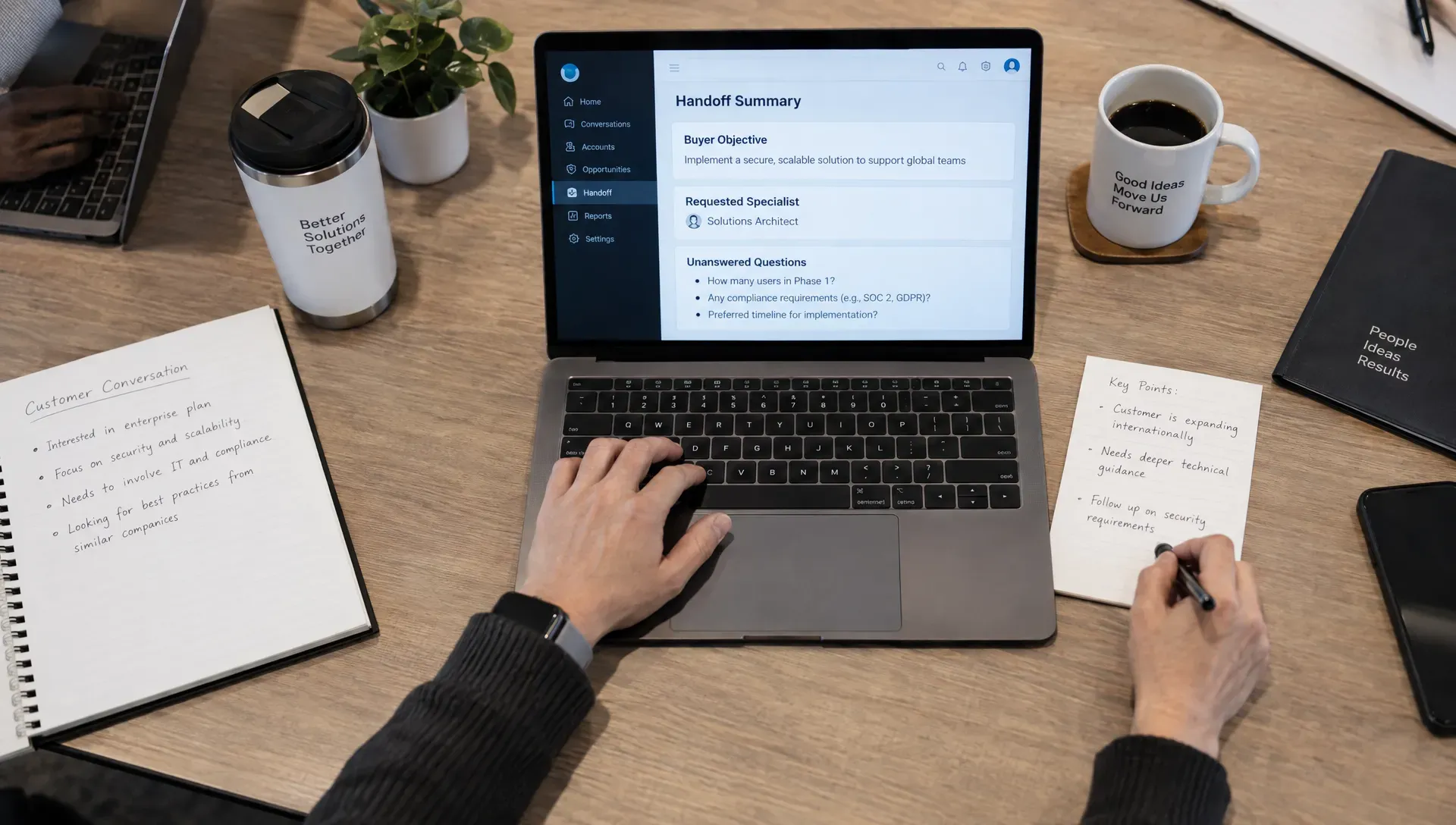
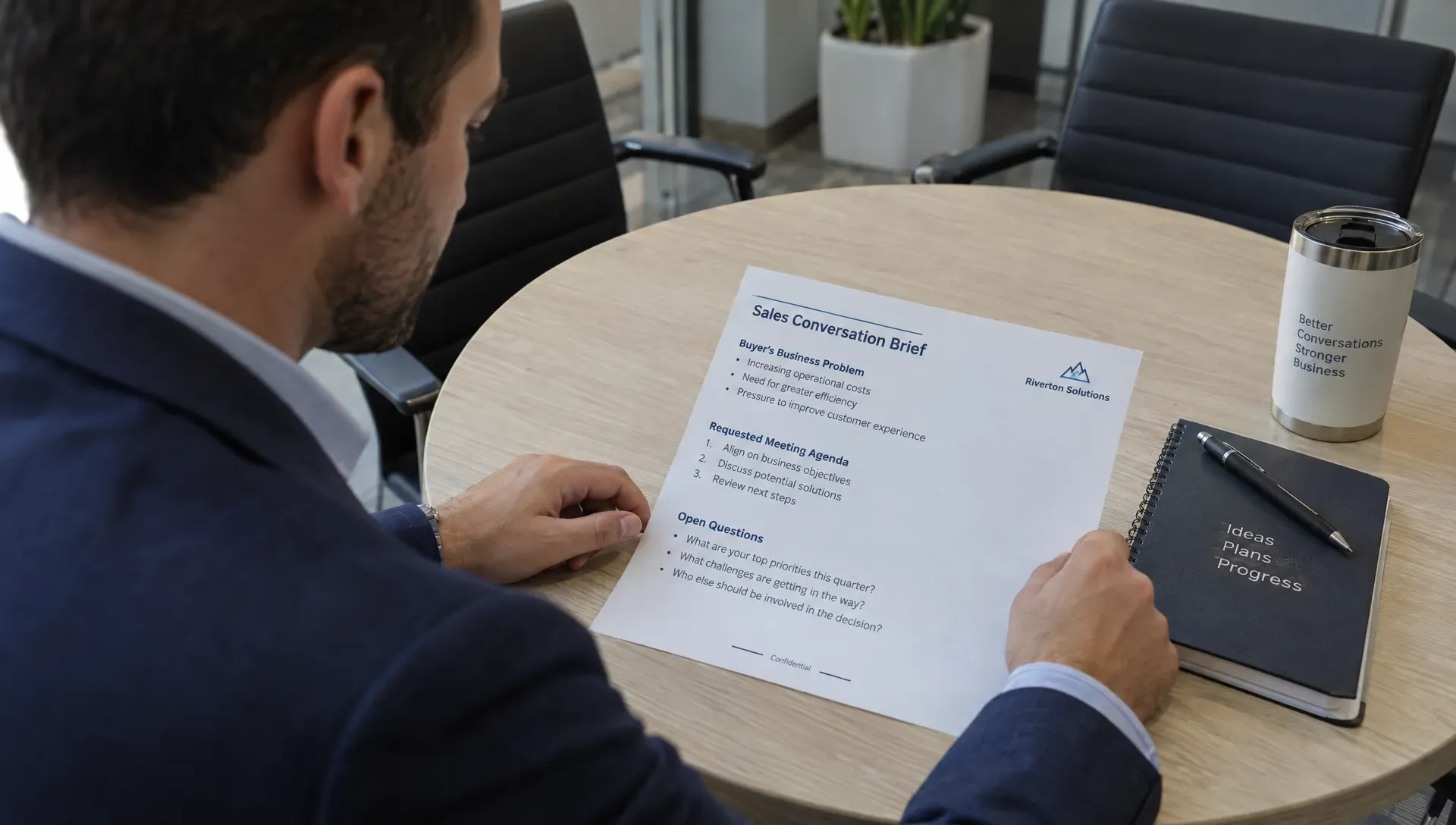
For each B2B conversation, preserve a short explanation of why a human interaction is warranted. A practical brief includes:
- Buyer’s objective: What they are trying to understand, change or decide, preferably in their own words.
- Reason for the meeting: The specific question or task that requires the receiving person.
- Known constraints: Requirements, timing dependencies or limitations the buyer actually stated.
- Stakeholder context: Who is involved and what each person needs, without inventing authority.
- Agreement and unknowns: The accepted next step, promised materials and questions still unanswered.
Keep buyer statements separate from seller interpretation. “We need this reviewed before our renewal” is evidence. “Urgent, likely to close this quarter” is an inference unless the buyer confirmed it.
A transcript can support the brief, but it should not substitute for one. The rep needs a usable starting point, not an assignment to reconstruct the conversation. This is where preparing sales meetings from website conversation data becomes valuable: preparation should preserve the buyer’s agenda and make uncertainty visible.
Measure whether the threshold produces useful meetings
Meeting volume alone cannot tell you whether your readiness standard works. Review what happens after the transfer and record why a handoff succeeds or fails.
Useful measures include the share of handoffs accepted by the intended owner, meetings that address the promised agenda and conversations that produce a mutually agreed next step. Also inspect how often reps must repeat questions that were already answered.
Treat rejection reasons separately. “Wrong owner,” “unsupported requirement” and “buyer never agreed to a meeting” indicate different problems. Combining them into one low-quality-lead category hides what needs fixing.
Review accepted and declined examples together. Ask whether the B2B conversation contained enough evidence for the decision at the time, rather than judging it only by whether a deal eventually closed.
An appropriate technical consultation can end with an honest no-fit conclusion. That may still be a useful handoff. A meeting that advances the buyer’s decision is different from one that merely adds activity to the pipeline.
Frequently asked questions
Does a buyer need a confirmed budget before a handoff? No. Budget may depend on technical validation, internal planning or a business case that does not exist yet. Record the uncertainty and define what the next conversation should accomplish. Confirmed commercial incompatibility deserves a different response from an unanswered budget question.
Is a demo request enough to make a B2B conversation sales-ready? It is enough to acknowledge the request and begin arranging an appropriate response. Confirm the intended use case and audience with minimal friction. A request for a tailored evaluation is more actionable than an unexplained calendar booking, but neither justifies inventing buying authority or urgency.
What if several stakeholders want different things? Capture each person’s question and agree on what the next meeting will cover. If the agendas require different specialists, separate the conversations or make the limits explicit. Do not promise one generic demo will resolve every stakeholder’s concern.
Should an AI agent complete qualification before a person gets involved? No. It should answer what it can accurately, preserve context and help arrange the requested next step. Human involvement is appropriate when the buyer requests it or the unresolved task needs human judgment, even if qualification remains incomplete.
Turn conversation context into a useful next step
Nudge engages website visitors, answers questions from your content with citations and books meetings. Its agents also support personalized follow-ups and prepare sales reps with lead briefs.
Apply the readiness tests to that conversation context: identify what the buyer needs, decide who can help and carry the unanswered questions forward. The goal is not to make every visitor look qualified. It is to ensure that when sales steps in, the buyer has a clear reason to be there.