More traffic will not fix lead generation for B2B software companies if visitors cannot understand the product, get their questions answered or reach the right salesperson. The useful outcome is not another contact in a database. It is a qualified buying conversation that can become revenue.
That requires different tactics for different software businesses. A self-service tool needs users to reach a valuable product outcome quickly. A sales-led platform needs evidence that it solves a costly problem. Enterprise software often needs both technical validation and agreement across a buying group.
The seven tactics below connect acquisition to conversion, qualification and sales follow-up. Each has a specific job, so you can choose based on your product, deal size and team capacity rather than copying a channel mix that worked elsewhere. Start with the biggest gap in your current funnel, then expand once you can measure whether the change produces better opportunities.
1. Anchor lead generation for B2B software companies in a specific ICP
An ideal customer profile should tell your team who to pursue and who to disqualify. “Midmarket companies that need automation” is too broad to guide a campaign.
Define the account characteristics that make your product useful: software stack, operating model, workflow complexity and relevant constraints. Then identify the buyer, the person doing the work and the event that makes change urgent.
For example, a procurement platform might target companies adding approval controls after opening new locations. That trigger is more actionable than company size alone.
Match your approach to how those accounts buy:
- Buying motion: Low-cost, self-service software — Best initial focus: Search, templates and product activation — Evidence to capture: Completion of the product’s core workflow
- Buying motion: Sales-led departmental software — Best initial focus: Use-case content, website conversations and targeted outreach — Evidence to capture: A relevant problem, stakeholder and next step
- Buying motion: Enterprise platform — Best initial focus: Account-based outreach, technical content and partner introductions — Evidence to capture: Buying-group access, implementation needs and procurement path
Choose one primary segment before adding channels. A small team can learn more from one focused campaign than from five campaigns serving unrelated buyers. Record exclusion criteria too, such as unsupported integrations or requirements the product cannot meet.
2. Publish content that proves one valuable workflow
Content-led lead generation for B2B software companies works best when it addresses a buying task, not just a broad topic. A prospect evaluating software needs to understand what changes in their workflow and what evidence supports your claims.
Build pages around specific questions: Does this integrate with our accounting system? What happens when an import fails? Can we migrate without interrupting operations?
For a finance-software example, converting bank statements into verified Excel or CSV files names the input, output and accuracy requirement. That specificity gives a buyer more to evaluate than a generic promise to “automate finance.”
Apply the same principle to your content. Show a sample input, explain how the product handles it and describe the usable output. Include limitations, supported integrations and the steps required to get started.
A strong workflow page can support several channels. Search brings in people researching the problem, sales uses it to answer objections and customers share it with colleagues involved in approval.
Give each page a next step that matches its intent. A comparison page might offer a tailored demo, while a technical guide might point to documentation or a sandbox. Keep broadly useful educational content accessible rather than forcing every visitor through a form.
Measure qualified conversations and opportunities influenced by the page, not downloads alone. A popular resource that attracts the wrong audience is not necessarily a pipeline asset.
3. Turn high-intent website visits into conversations
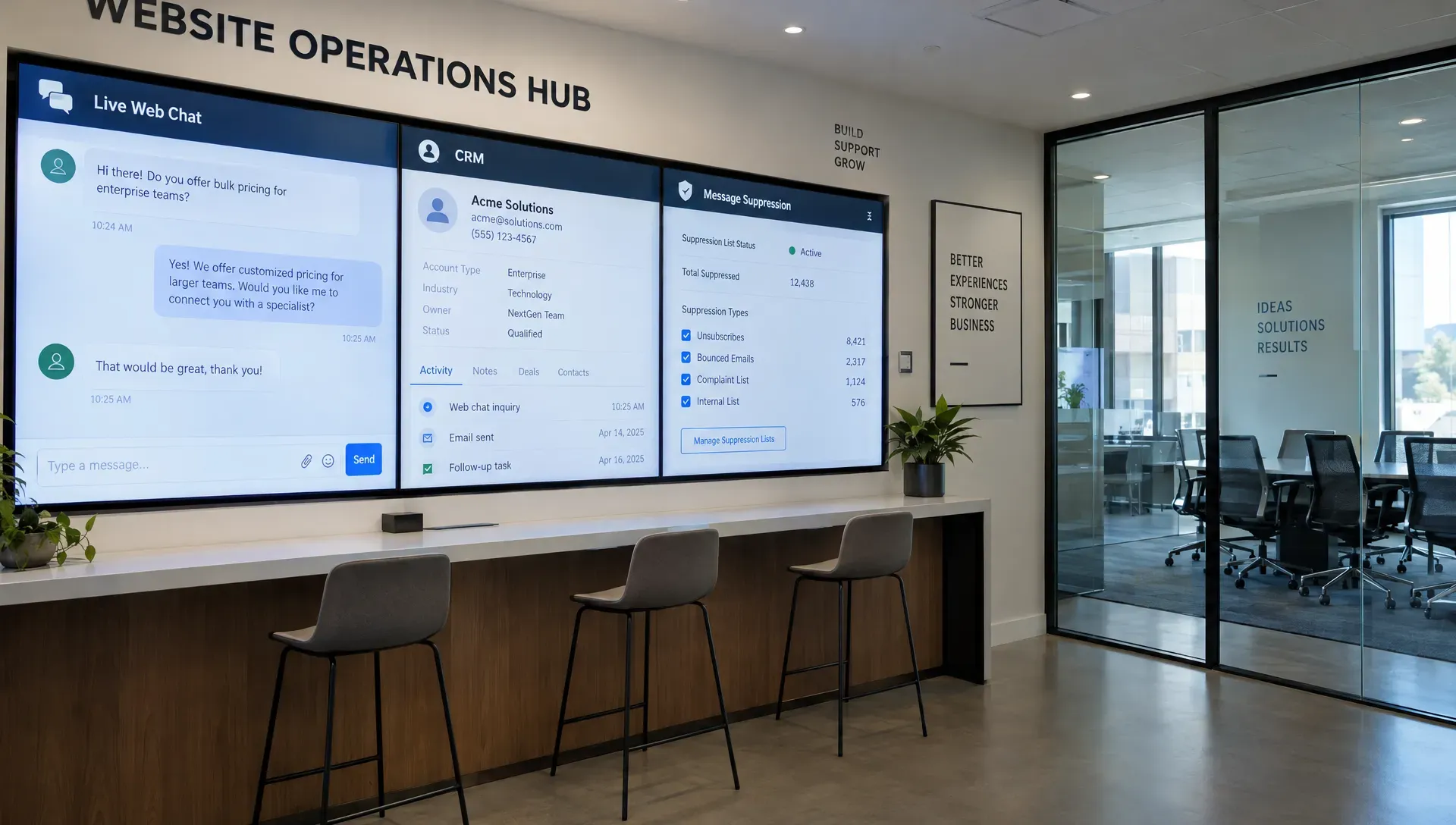
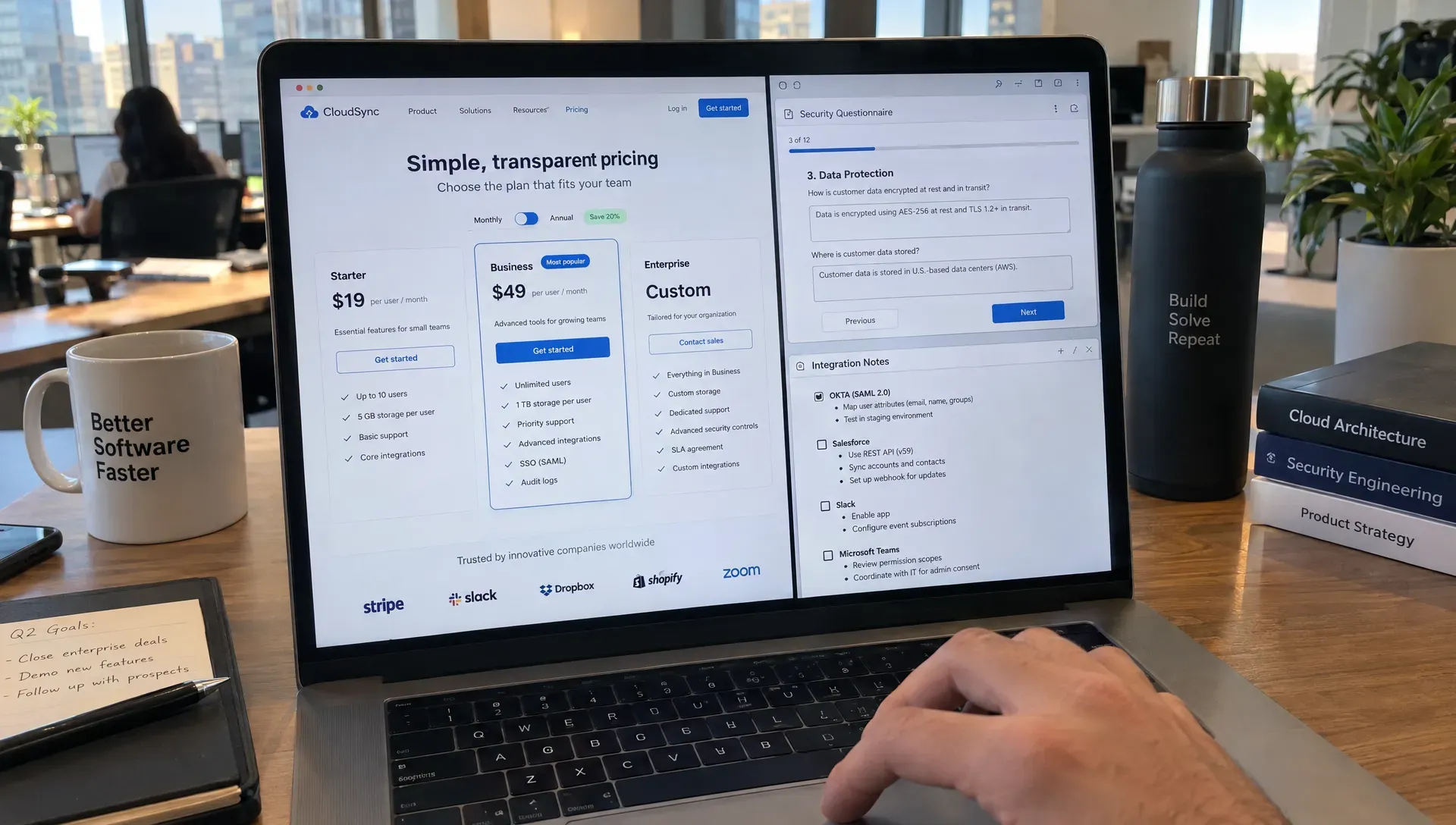
Pricing, integration, security and implementation pages often attract visitors with specific concerns. If their only option is a generic contact form, you may lose a useful conversation before it begins.
Start by reviewing the questions sales repeatedly answers. Put clear answers on the relevant pages and offer a conversational path for questions that need context.
For lead generation for B2B software companies, the goal is to reduce uncertainty before requesting a meeting. Ask only what you need to establish fit and choose an appropriate next step. A visitor asking about an integration should not have to complete a lengthy qualification script first.
Nudge supports website conversations, content-based answers with citations and automated meeting booking. Its follow-up, returning-visitor identification and sales preparation briefs help continue the conversation beyond the first visit. A B2B lead-generation chatbot should be evaluated on those practical outcomes, not conversation volume alone.
Keep clear boundaries around automation. If an answer is unsupported, direct the visitor to a person or a reliable resource rather than inventing a commitment about pricing, security or product capability.
Track what happens after engagement: qualified meetings held, opportunities created and questions left unresolved. Also distinguish anonymous visits from known contacts. Identification capabilities do not mean every visitor can be reliably identified or contacted, and tracking must follow applicable privacy requirements.
4. Use trigger-based outbound instead of broad contact blasts
Outbound becomes more relevant when it starts with a verified reason an account may need your software. Useful signals include a public systems migration, expansion into a new market or a job posting that reveals a workflow problem.
These signals are hypotheses, not proof of buying intent. Hiring a finance operations manager does not automatically mean a company needs your finance platform.
Effective lead generation for B2B software companies connects the signal to a problem the product can credibly solve. A short message can reference the trigger, explain the relevant workflow and offer a useful next step without pretending to know the buyer’s internal priorities.
For example: “Your team is expanding into three regions. If that introduces separate approval processes, this checklist may help you compare centralized and local controls.”
Use social selling to establish context rather than immediately pitching every new connection. Share practical observations, respond to relevant questions and contact people when there is a clear reason.
Before using a contact database, verify the source, collection date and relevance of the records. Maintain suppression lists, honor objections and avoid uploading unnecessary personal data into outreach tools.
In the US, the FTC’s CAN-SPAM compliance guide explains commercial email requirements, including accurate sender information and opt-out obligations. Other jurisdictions impose different rules, so do not treat a purchased address as universal permission to contact someone.
5. Build referral and product-led paths around demonstrated value
Referrals work better when customers have something specific to recommend. Ask after a meaningful outcome, such as a completed rollout or a successful reporting cycle, rather than immediately after contract signature.
Make the introduction easy. Give the customer a short description of who you help and the problem you solve. An introduction to a relevant peer is more useful than a request to “share us with your network.”
Product-led lead generation for B2B software companies follows a similar principle: let prospects experience value before asking for a larger commitment. Depending on the product, that might mean a trial, sandbox, interactive example or limited workflow.
Choose an activation event that reflects genuine usefulness. Signing in is rarely enough. Completing an import, publishing a report or inviting a necessary collaborator may be more meaningful, provided that action actually demonstrates your product’s value.
Do not force a trial onto software that requires extensive setup, sensitive data or complex integration. A guided proof of concept may be a better fit.
For a lean team, begin with one customer referral request and one product-value experiment. Track whether referred or activated accounts become qualified opportunities, and whether they need less assistance to evaluate the product. A surge in free accounts is not a success if they never reach a useful outcome.

6. Agree on qualification, response times and handoffs
Lead capture creates work for sales. Without an agreed definition of readiness, marketing may celebrate volume while representatives spend time rejecting unsuitable contacts.
Use a shared qualification standard that covers account fit, the buyer’s problem and a credible next step. Keep unknown information separate from negative information. A prospect who has not disclosed a budget is not necessarily unqualified.
Operational discipline makes lead generation for B2B software companies more effective because it prevents useful context from disappearing between teams. Each handoff should include the question asked, relevant product interests, known constraints and the next action promised to the buyer.
Set a response target by intent. As an illustrative service level, a staffed team might aim to acknowledge explicit demo requests within five minutes during business hours. A content download should not automatically trigger the same urgency or outreach sequence.
Specify who owns each lead, what happens outside staffed hours and when unaccepted leads return to a queue. An automated acknowledgment can set expectations, but it is not the same as a substantive response.
Use CRM integrations to preserve context, then audit sample records to confirm that the information actually arrives. The salesperson should not need to ask the buyer to repeat the entire conversation.
When timing is wrong, continue from the buyer’s stated concern. These context-based lead nurturing examples show how follow-up can address unfinished evaluations rather than restart a generic sequence.
7. Allocate budget using qualified pipeline and revenue
A channel can generate inexpensive contacts and still be commercially weak. Evaluate lead generation for B2B software companies through the full funnel, using consistent definitions across marketing and sales.
Start with a small set of metrics:
- Metric: Lead-to-opportunity rate — What it helps you assess: Whether acquired contacts become credible buying opportunities
- Metric: Qualified meetings held — What it helps you assess: Whether booked conversations happen and meet your fit criteria
- Metric: Cost per qualified opportunity — What it helps you assess: Acquisition efficiency beyond raw lead cost
- Metric: Sourced pipeline — What it helps you assess: Opportunity value associated with the acquisition source
- Metric: Closed-won revenue and sales-cycle length — What it helps you assess: Commercial outcomes and time required to achieve them
Define an opportunity consistently, for example as a suitable account with a confirmed problem and agreed evaluation step. Otherwise, teams can inflate pipeline simply by changing CRM stages.
Consider this illustrative comparison: one campaign produces 100 leads and two qualified opportunities worth $20,000 in total. Another produces 40 leads and four opportunities worth $80,000. The second creates more qualified pipeline, but you still need spend, win rates and eventual revenue to judge its economics.
Separate sourced attribution from influenced attribution so you do not count the same opportunity multiple times. Review cohorts over a window appropriate to your sales cycle; an enterprise campaign cannot be judged fairly on one month of closed revenue.
Finally, inspect conversations alongside the dashboard. Repeated objections about implementation or missing integrations may explain weak conversion better than a channel label does. Use that evidence to improve targeting, content or product positioning before buying more traffic.
Start with the conversion gap you can verify
Choose one bottleneck for your next experiment: poor-fit traffic, unanswered buying questions, weak activation or delayed follow-up. Set a baseline and judge the change by qualified opportunities, not activity alone.
If visitors are leaving with unresolved questions, explore how Nudge supports website conversations, meeting booking and continued follow-up. Fix the handoff from interest to a useful next step before increasing acquisition spend.
Frequently asked questions
Where can B2B software companies find leads?
Relevant sources include high-intent search, existing website traffic, customer introductions, product users, technology partners and targeted account research. Choose sources where your buyers already investigate the problem, then verify fit rather than treating every contact as sales-ready.
What is the five-minute rule for leads?
It is a response-time guideline, not a universal guarantee of conversion. In lead generation for B2B software companies, prioritize fast, useful responses to explicit buying requests. Set realistic coverage hours and distinguish automated acknowledgment from actual help.
What free tools can help with lead generation?
Google Search Console can reveal search queries and page performance, while Google Analytics can help measure website behavior. A spreadsheet can support early account research and handoff tracking. These help you find and evaluate demand; they do not provide an automatically qualified contact list.
Should we choose a platform or a lead-generation agency?
Use a platform when the process and internal ownership are clear but execution needs automation. Consider an agency when you lack channel expertise or delivery capacity. In either case, evaluate data provenance, qualification standards, CRM access and ownership of buyer context, not promised meeting volume alone.