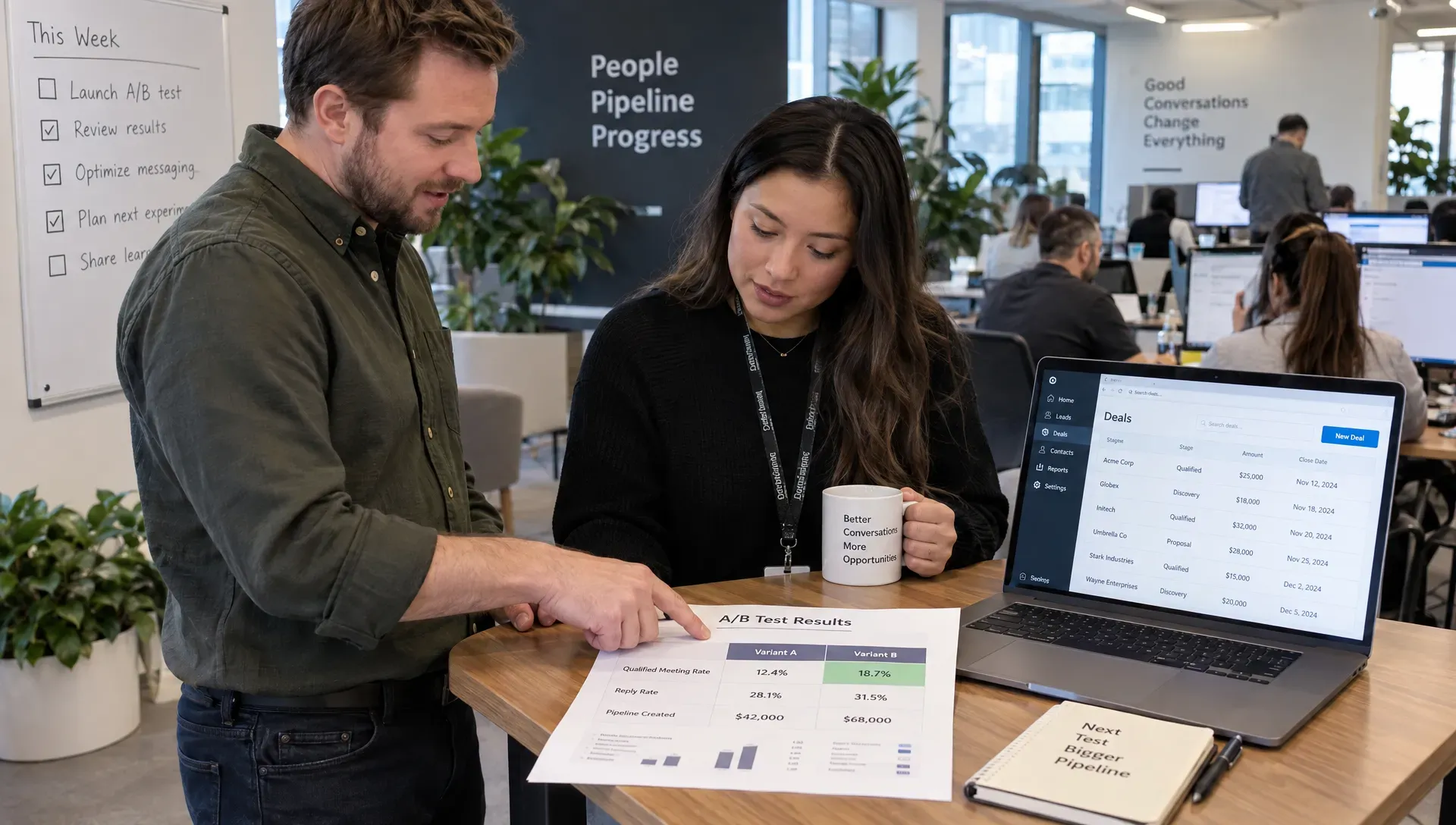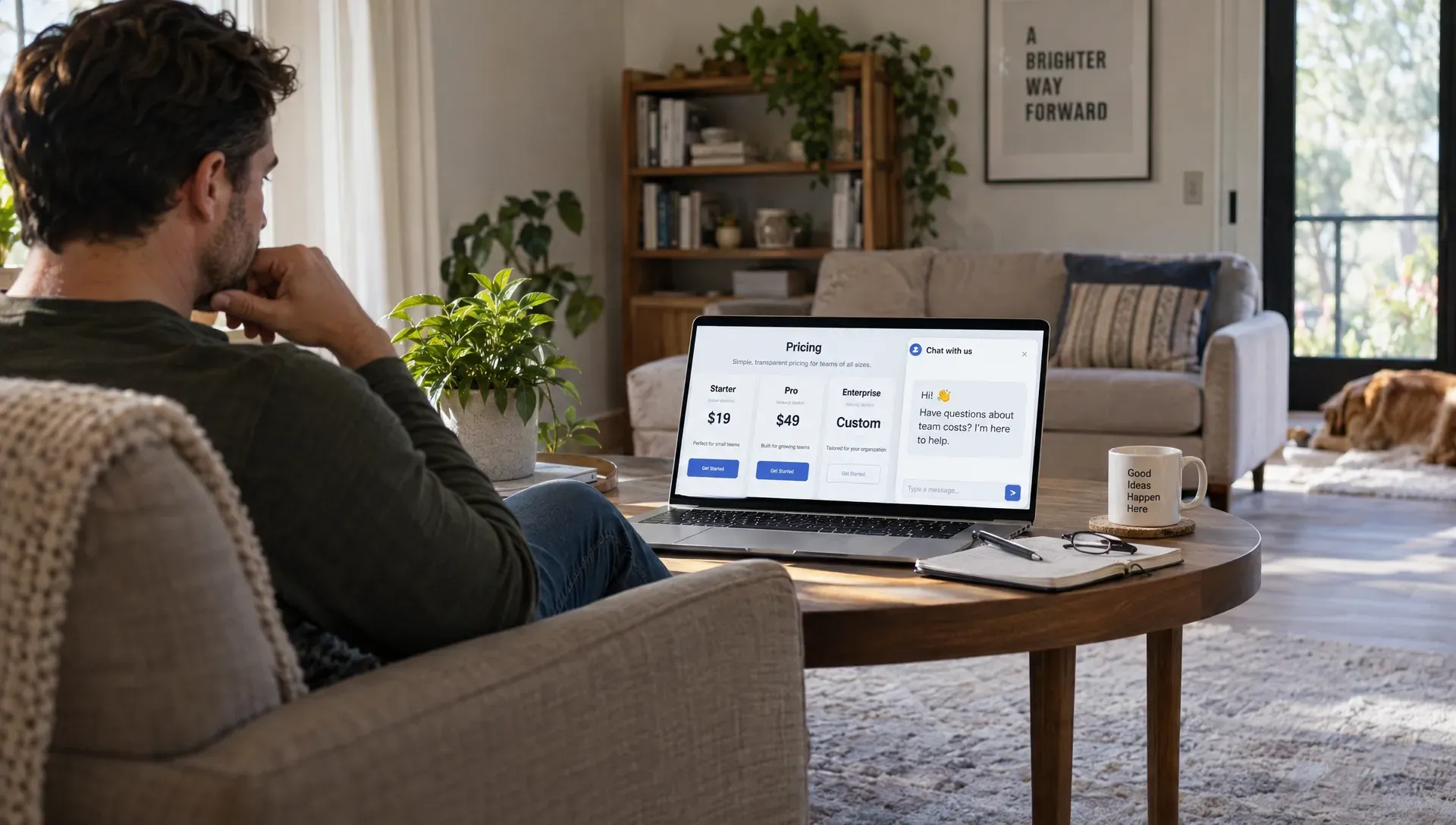
Inside B2B sales is the process of selling to businesses through remote channels such as phone, email, video meetings and website conversations. For a distributed buying team, the seller’s job goes beyond running a good demo. It includes helping people in different roles and time zones reach a shared decision.
That changes how a deal should progress. A meeting with one enthusiastic contact is not the same as agreement from finance, IT or the person who owns the budget. Effective remote selling combines live conversations with useful written evidence, explicit responsibilities and a clear next step.
Inside sales is a delivery model, not a lead source
Inside sales describes how sellers interact with buyers, not where leads originate. An inside sales team can respond to inbound inquiries, prospect into target accounts or manage expansion conversations with existing customers.
Outside sales relies more heavily on in-person interactions. A hybrid approach combines remote engagement with selected onsite meetings. The right choice depends on what buyers need to evaluate, not simply the size of the contract.
A software evaluation may happen entirely online, while equipment procurement may require a site visit. Both can involve substantial remote work before a decision.
The distinction also matters for staffing. “Inside sales” does not mean “appointment setting.” A representative may own prospecting, qualification, negotiation and closing, or handle only part of that process. What matters is that buyers know who owns their questions and commitments.
How does inside B2B sales work for remote teams?
The workflow should follow the buyer’s decision rather than a fixed sequence of calls. Consider an operations manager evaluating workflow software, with finance in another time zone and IT reviewing technical requirements asynchronously. Here is how that purchase can move forward.
Capture intent without restarting the conversation
The first interaction should establish what the buyer is trying to accomplish. Someone asking about an integration needs a different response from someone requesting a pricing discussion.
Answer the immediate question before pushing for a meeting. If a conversation would help, explain its purpose and who should attend. A useful invitation might promise to examine the buyer’s approval workflow, rather than offer a generic product tour.
Preserve the context already shared: the question, relevant requirements, the answer given and anything still unresolved. If the buyer moves from a website conversation to a sales call, the representative should not make them repeat everything.
For outbound engagement, the same principle applies. A reply expressing interest in one use case is permission to explore that use case, not evidence that the account is ready for a proposal.
Qualify the problem and the decision path
Qualification in inside B2B sales should establish whether there is a worthwhile problem to solve and a realistic way to make a decision remotely.
Explore the current process, its business impact and what would justify changing it. Then ask how the organization evaluates purchases of this kind. Budget matters, but so do technical constraints, internal ownership and the effort required to implement a solution.
Useful discovery questions include:
- What happens today, and where does that process break down?
- What outcome would make a change worthwhile?
- Who needs to validate the solution or approve the purchase?
- Is there an event driving the timing, or is the team still exploring?
Do not turn an initial inquiry into an interrogation. Capture what is known, distinguish assumptions from confirmed facts and identify the next unanswered question.
Map the buying group, not just the main contact
The operations manager may understand the problem without controlling the budget. IT may determine technical feasibility, while procurement manages contracting. These responsibilities can overlap, particularly in smaller companies.
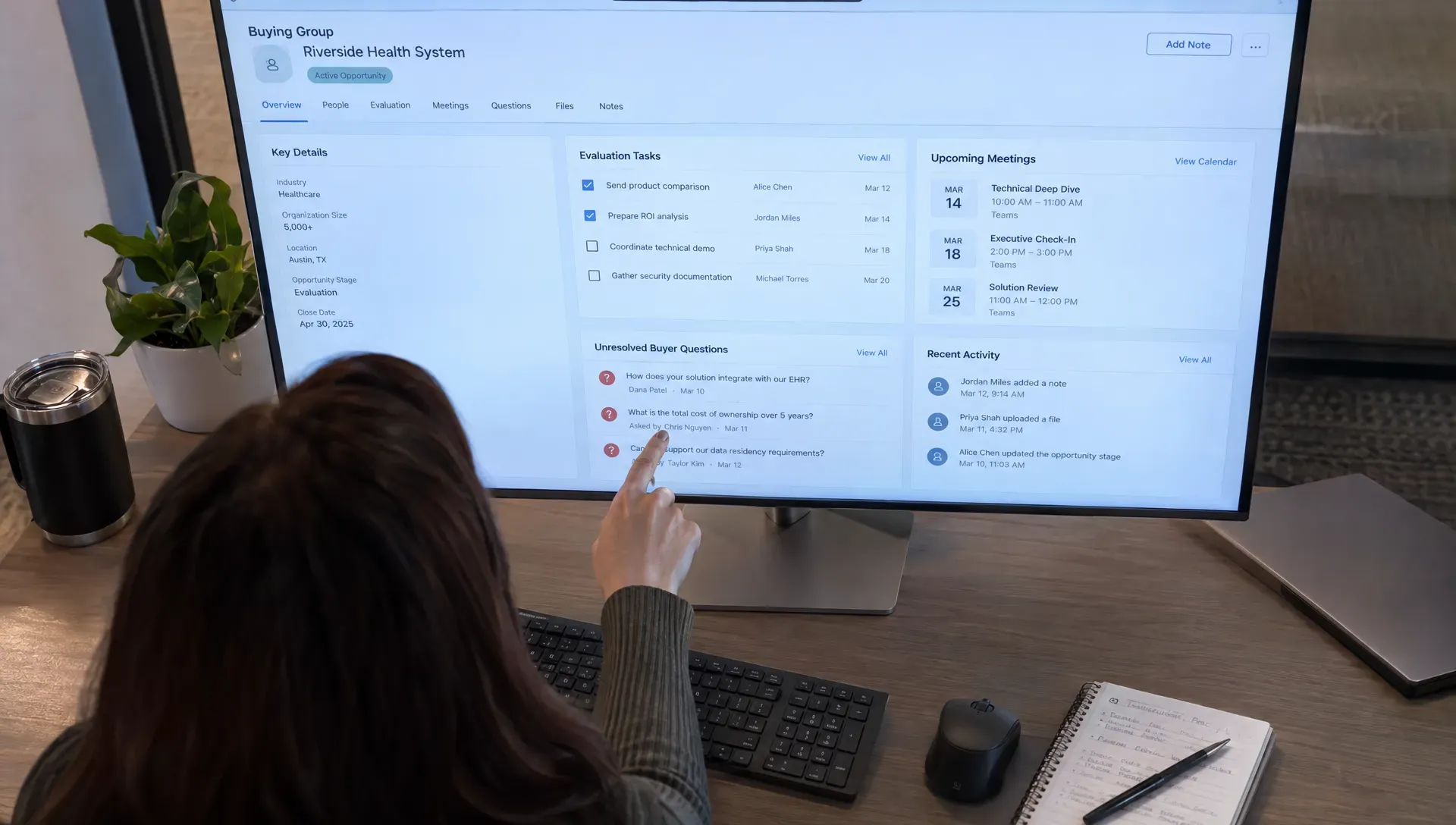
Record each participant’s role in the decision, what they need to verify and whether the seller has spoken with them directly. A name on an opportunity record does not establish that person’s support.
Effective inside B2B sales gives the main contact material they can use internally without making them responsible for answering every specialist question.
Ask which stakeholders should join a discussion and which would prefer a concise written response. For example, finance may need a transparent cost summary rather than a product demonstration. A technical reviewer may need documentation before agreeing to a call. Respect those differences instead of trying to bring everyone into every meeting.
Demonstrate the workflow and leave usable evidence
A remote demo should test a relevant scenario. Start with the workflow discussed in discovery, show how it would operate and acknowledge any requirements that remain unverified.
Use live time for questions, trade-offs and decisions that benefit from discussion. Use asynchronous material for information buyers need to review or circulate later.
Afterward, send a concise summary covering the problem examined, what the demonstration established and what still needs validation. Link to approved documentation rather than making unsupported statements about security, integrations or implementation.
For inside B2B sales, the follow-up should remain useful to a stakeholder who missed the meeting. “Great speaking today” is courteous, but it does not help an absent budget owner understand the proposed change.
Ask the buyer to correct the summary. That creates an opportunity to discover misunderstandings before they become proposal objections.
Agree on a shared evaluation plan
When several people must contribute, a shared plan makes dependencies visible. Keep it short enough that the buyer will actually maintain it.
Each task needs an owner, a target date and a definition of completion. Dates should come from the buyer’s actual process, not an arbitrary sales deadline.
- Evaluation task: Validate the priority workflow — Buyer-side owner: Operations lead — Evidence of completion: Required scenarios reviewed and gaps documented
- Evaluation task: Review technical requirements — Buyer-side owner: IT or security reviewer — Evidence of completion: Open questions answered or assigned
- Evaluation task: Confirm commercial fit — Buyer-side owner: Budget owner — Evidence of completion: Scope and costs reviewed against available funding
- Evaluation task: Complete purchasing requirements — Buyer-side owner: Procurement or authorized approver — Evidence of completion: Required approvals and contracting steps completed
This is an illustrative structure, not a mandatory buying process. Some purchases need a pilot, legal review or accessibility assessment; others do not.
If a task stalls, ask what prevents completion. Another reminder will not fix a missing reviewer, an unresolved requirement or a project that has lost priority.
Resolve approvals and transfer commitments
Late-stage inside B2B sales depends on confirming approval requirements, not interpreting positive meeting feedback as a buying decision.
Check who can authorize the purchase, which documents are required and whether any commercial or implementation conditions remain open. If the buyer cannot yet identify a path to approval, record that uncertainty rather than treating the deal as committed.
After agreement, pass the delivery team the buyer’s intended outcome, agreed scope, relevant stakeholders and outstanding commitments. Separate contracted obligations from ideas discussed during evaluation.
Defining clear handoff responsibilities helps prevent the buyer from having to reconstruct the sales conversation for a new team. Introduce the next owner and explain what happens next, including anything the customer must prepare.
Connect the systems that carry buyer context
A remote workflow becomes harder to manage when website conversations, email threads, meeting notes and opportunity records tell different stories. Decide where each kind of information belongs and who maintains it.
The CRM should distinguish verified requirements from assumptions, identify decision participants and show the next agreed action. Calendar and communication tools should support that record rather than become competing sources of truth. When evaluating software for B2B sales CRM workflows, test the actual handoff and field updates, not just whether an integration appears on a vendor’s website.
Connected systems also matter when inside B2B sales involves an existing customer. An unresolved support issue may affect whether an expansion discussion is appropriate. For organizations using Zendesk, these examples of Zendesk integrations for B2B companies explain how CRM and collaboration connections can make customer context more accessible.
Set access rules deliberately. Salespeople need relevant account information, not unrestricted access to every support record. Similarly, returning-visitor identification should be handled within the organization’s privacy and consent requirements. Keep uncertain identity matches separate from confirmed contacts, and require human review for commitments about contracts, security or delivery.
Measure buyer progress, not just sales activity
Calls, emails and booked meetings describe activity. They do not establish whether a distributed buying group can make a decision.
Pair activity reporting with measures of progression and quality. Define each metric consistently so a change in reporting rules does not look like an improvement in performance.
- Measure: Held-meeting rate — Practical definition: Meetings held divided by meetings scheduled to occur in the reporting period — What it helps diagnose: Whether bookings become actual conversations
- Measure: Qualification rate — Practical definition: Qualified opportunities created from a cohort of held first meetings, divided by those meetings — What it helps diagnose: Whether meetings involve suitable problems and accounts
- Measure: Open-stage age — Practical definition: Days since each open opportunity entered its current stage — What it helps diagnose: Where evaluations may be stuck
- Measure: Next-step coverage — Practical definition: Open opportunities with a buyer-agreed action, owner and date, divided by open opportunities — What it helps diagnose: Whether the pipeline has a credible path forward
Look at these measures by relevant segment, such as inbound versus outbound or new business versus expansion. Their buying conditions differ, so a blended average can conceal useful patterns.
Review the underlying conversations when a metric changes. A falling qualification rate could reflect poor targeting, a changed definition or a different lead mix. More meetings alone will not explain it.
During pipeline reviews, ask for evidence of buyer progress: a completed technical review, a confirmed budget discussion or an agreed evaluation result. An internal forecast label is not a substitute.
Start with the first unanswered question
Improving inside B2B sales does not have to begin with another sequence or dashboard. Examine one buyer journey from the initial website question to the first sales meeting. Identify where answers, ownership or context disappear.
Nudge supports that workflow with AI website conversations, content-based answers with citations and automated meeting booking. Its personalized follow-ups, returning-visitor identification, meeting-preparation briefs and CRM integrations help teams continue the conversation beyond the initial interaction.
Evaluate the fit using a real buyer scenario: can the visitor get a relevant answer, reach the right next step and meet a representative who understands what has already been discussed?
Frequently asked questions
Is inside B2B sales the same as an SDR role?
No. Inside sales is a remote selling model. An SDR typically focuses on prospecting or qualification, while an inside account executive may own discovery, proposals, negotiation and closing. Responsibilities vary by company.
Can complex enterprise purchases happen entirely remotely?
They can when buyers can validate the solution, assess risk and secure approvals through remote interactions. An onsite visit may still be appropriate for physical inspections, site-specific requirements or a workshop that benefits from in-person participation.
What should an inside sales executive own?
The executive should own the agreed part of the opportunity process, maintain accurate buyer context and coordinate unresolved questions. They should bring in technical, legal or delivery colleagues when an answer requires those teams’ authority.
How can sellers avoid overwhelming a remote buying team?
Consolidate updates, tailor material to each stakeholder and use meetings for issues that need discussion. Agree on communication preferences instead of automatically adding every participant to every follow-up.