Returning prospects can give your sales team useful context, but a repeat visit is not proof that a particular person is back. A browser identifier, a previously submitted email address and a company-level signal each support different claims. Treating them as interchangeable can lead to awkward personalization, incorrect CRM records and inflated pipeline reporting.
The practical goal is to recognize enough context to help someone continue their evaluation without pretending to know more than you do. That requires separating what your system observed, what it inferred and what action the evidence justifies.
Recognizing returning prospects starts with separating four claims
Before choosing a recognition tool or configuring an AI sales assistant, define what “recognized” means. These four evidence types should not collapse into a single “known visitor” label.
- Evidence type: Returning browser identifier — What it supports: A browser presented an identifier seen previously — What it does not establish: The same person is using it
- Evidence type: Prior email association — What it supports: A browser or interaction was previously associated with a submitted email — What it does not establish: The address was verified or its owner is browsing now
- Evidence type: Company-level inference — What it supports: Available signals suggest an organization — What it does not establish: A specific employee’s identity or buying authority
- Evidence type: Authenticated account — What it supports: The session is authenticated to a particular account — What it does not establish: That credentials are never shared or that every action reflects purchase intent
These distinctions matter in ordinary situations. A prospect may share a laptop with a colleague. A buying committee may forward an email. A legitimate buyer may return on a phone that has no connection to their earlier desktop session.
Your system should be able to say “unrecognized” without treating that as a failure. An honest gap is safer than a confident but incorrect match.
Preserve the evidence behind every match
A single identity score hides too much. “High confidence” could mean an authenticated session, a stable browser cookie or several weak signals combined. Those are not equivalent.
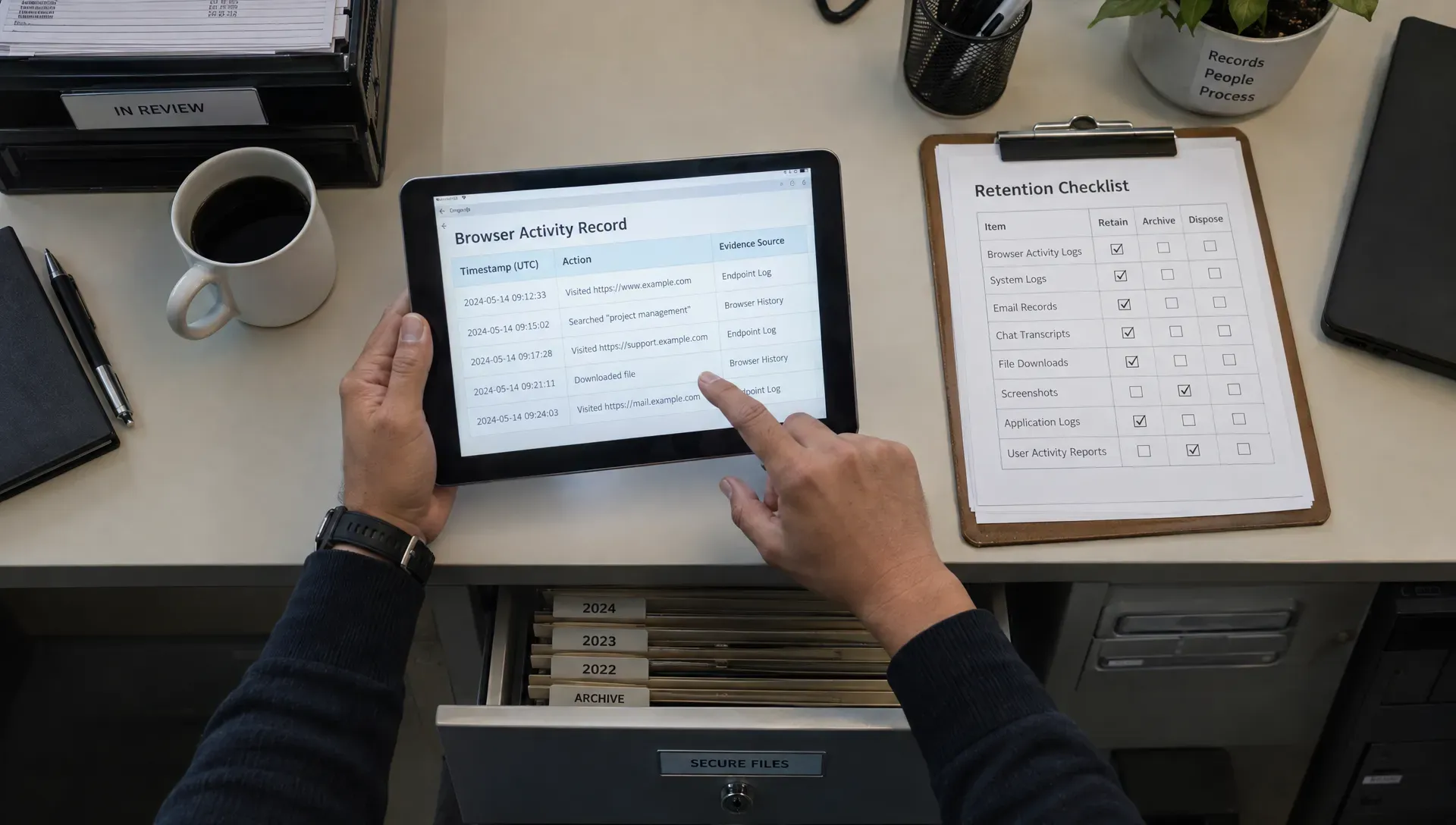
For each recognition event, retain the evidence type, its source, when it was observed and the record it was associated with. Also preserve whether the connection was explicit, such as a form submission, or inferred, such as a company estimate from network information.
A useful internal note might read:
Returning browser identifier. Associated with a submitted business email during a previous conversation. Email ownership was not verified. Current user is not authenticated.
That note gives a salesperson usable context without claiming a named individual has returned.
Avoid presenting numerical confidence percentages unless you have measured how well those estimates correspond to correct matches. A score of “97%” looks precise, but precision in the interface does not make the underlying claim reliable.
Recognition should also be reversible. When a visitor corrects an association, an identifier expires or a record is deleted, downstream systems need a way to stop relying on the old connection.
Build recognition from explicit, first-party connections
Use browser continuity for continuity, not personal identification
A first-party identifier can help a website recognize a browser across visits. As MDN’s documentation on HTTP cookies explains, cookies can support stateful behavior such as session management and personalization.
The limitation is straightforward: a browser identifier identifies a browser context, not a human being. Shared devices can create false continuity. Different devices, cleared storage and browser restrictions can break real continuity.
Use an opaque identifier rather than putting an email address directly into a tracking cookie. Keep associated contact details in an appropriately protected system and limit access to them.
Also apply consent requirements for nonessential storage or tracking where required. Calling an identifier “first-party” does not automatically make its use exempt from privacy rules.
Treat email submission as an association with a history
When someone supplies an email during a conversation or form submission, you gain a contact detail and an explicit interaction. You do not automatically gain verified identity.
Record the distinction between a submitted address and verified control of that address. Verification can strengthen an association at that moment, but it still does not prove who is using a returning browser later.
Email-link activity needs similar care. Links can be forwarded and automated security systems may inspect them. A tracked click should not automatically authenticate a visitor, merge contact records or prove that a named buyer personally revisited your pricing page.
When identity matters, such as before showing private account information, require appropriate authentication rather than relying on a marketing recognition signal.
Keep company inference at the company level
Network information may suggest that traffic comes from an organization. VPNs, shared offices, remote work and service-provider routing can make that inference uncertain.
Even an accurate company match does not identify an employee. It cannot tell you whether the visitor is a decision-maker, an existing customer, a job applicant or someone conducting research.
Use company-level evidence to prioritize aggregate account research or offer broadly relevant content. Do not use it to announce that a particular CRM contact is currently on the website.
Keep buying intent separate from identity
Recognizing a browser and interpreting its behavior are separate tasks. Neither should silently strengthen the other.
Repeated pricing-page visits may justify offering help, but they do not establish budget, authority or a purchasing deadline. A visitor might be comparing vendors, supporting an internal project or checking a detail for a colleague. Nudge’s guide to B2B buying signals provides a broader framework for interpreting evaluation behavior alongside explicit buyer questions.
The distinction also applies outside B2B. Consider a hypothetical visitor comparing diamond engagement rings at Raphana Jewellery. Returning to the same collection could reflect personal shopping, research for someone else or simple comparison. The browsing pattern alone establishes neither identity nor a definite purchase plan.
In B2B sales, store identity evidence and intent evidence separately. “Browser associated with an earlier email” describes recognition. “Viewed implementation documentation” describes behavior. “Asked for a security review before next month’s rollout” is an explicit statement that adds much stronger commercial context.
Match personalization to the strength of the evidence
The best recognition policy specifies what the team may do, not just what the software can detect.
- Available evidence: Unrecognized visitor — Appropriate response: Answer questions and offer relevant help — Avoid: Inventing previous interactions
- Available evidence: Returning browser only — Appropriate response: Offer a neutral continuation option — Avoid: Addressing the visitor by an inferred name
- Available evidence: Browser associated with a prior email — Appropriate response: Use the association internally, subject to privacy rules and access controls — Avoid: Revealing contact details or sensitive conversation history in chat
- Available evidence: Company-level inference — Appropriate response: Offer relevant industry or company-type information — Avoid: Claiming a named employee has returned
- Available evidence: Authenticated account — Appropriate response: Personalize within the account’s permissions — Avoid: Exposing information beyond the user’s authorization
For example, “Can I help you compare plans?” is useful without making an identity claim. “Welcome back, Maya. Are you still replacing your current vendor?” exposes a name and potentially sensitive context to whoever is using the browser.
Even “Continue your previous conversation” needs care if selecting it reveals private details on a shared device. For sensitive history, ask the visitor to authenticate or confirm an appropriate continuation path first.
Personalize the help before personalizing the identity. A good answer to the current question usually matters more than proving that your system remembers someone.

Put a separate eligibility check before outreach
A returning visit may be a reason to review a contact. It is not, by itself, permission to email them.
Before triggering automated sales follow-up, check the contact’s communication eligibility under applicable rules, any required consent, suppression status and relevant relationship history. A previously submitted email should not override an unsubscribe request or another restriction.
Then assess whether the message has a useful purpose. Answering an unresolved integration question is more relevant than sending “We saw you looking at our pricing again.” The first continues a business conversation. The second makes an uncertain observation the centerpiece of the message.
A restrained follow-up might say:
You previously asked whether the platform connects with your CRM. Would a short integration walkthrough help with your evaluation?
That wording relies on an actual earlier question rather than claiming certainty about the latest visit. For the message itself, the principles in setting up automated sales follow-up that feels personal help turn relevant context into a useful next step.
Keep uncertain matches out of permanent CRM facts
Recognition events should not automatically overwrite contact identity or merge records. A mistaken merge can spread beyond the website into routing, outreach, meeting preparation and reporting.
Store observations separately from canonical contact fields. A return event can include its associated record and supporting evidence without changing the contact’s email, company or ownership assignment.
Require stronger evidence for higher-impact actions. Offering a generic chat prompt needs less certainty than exposing conversation history, merging two contacts or updating an opportunity. Ambiguous cases should remain separate until resolved.
Pseudonymous identifiers also need appropriate privacy treatment. Under the GDPR’s definition of personal data, online identifiers can fall within scope when they relate to an identifiable person. “We do not display a name” is not the same as “this data is anonymous.”
Set retention periods around a documented purpose. Restrict access and ensure correction or deletion workflows address the systems holding these associations, not just the visible CRM contact.
Measure outcomes without inflating recovered pipeline
Keep recognized browsers, contact-associated returns, qualified meetings and opportunities as distinct reporting categories.
A returning browser is not a lead. A booked meeting is not automatically a qualified opportunity. A reopened opportunity is not automatically pipeline caused by your recognition system.
Use your CRM’s opportunity definitions when reporting recovered pipeline. If you want to claim incremental impact, use an appropriate comparison, such as a controlled holdout, rather than attributing every later conversion to the recognition event.
Review incorrect matches and visitor corrections alongside conversion rates. Otherwise, a system can appear successful while quietly accumulating identity errors.
How this applies to Nudge
Nudge engages website visitors, answers questions and books meetings. Its Outreach Agent is described as identifying visitors who previously shared an email and return to pricing, demo or quote pages without booking, then drafting a personalized follow-up.
The important boundary is the same: a prior email association should not be described as proof that the named person is currently browsing.
When evaluating your implementation, ask what evidence supports a returning-visitor match, how uncertainty reaches the sales team and which actions require stronger verification. Treat the policies in this article as evaluation criteria, not as assumptions about any vendor’s matching method or configuration options.
Define the claim before enabling the action
Before launching returning-visitor outreach, document three things: what was observed, what that evidence permits you to say and what it permits you to do. If those answers differ, preserve the distinction in the interface, CRM and follow-up message.
Frequently asked questions
Can you recognize returning prospects without knowing their names?
Yes. A persistent browser identifier can support continuity without a named contact. It still does not prove that the same person returned and may require privacy controls depending on its use and jurisdiction.
Does a submitted work email verify someone’s identity?
No. It creates an association with the submitted address. Verifying control of that address strengthens the evidence, but does not establish the identity of every later visitor using an associated browser.
Can you recognize the same prospect across devices?
Sometimes, through an explicit connection such as an authenticated account. Without a reliable connection, keep the sessions separate rather than forcing a match from weak similarities.
Should a sales rep mention that a prospect returned?
Usually, the more useful approach is to reference a genuine prior question or offer relevant help. Avoid presenting uncertain browsing evidence as a confirmed action by a named person.